

Online Notary in the UAE
Notarisation in the UAE used to mean an in-person visit, a queue, and — if you were abroad — a dedicated trip. Today the whole process runs over video call: a 5-10 minute conversation with a notary, and a finished electronic document with a QR code for verification lands in your inbox. The only real variable is which authority handles the notarisation, and that depends on your residency status, not on the type of document. This guide covers which documents can be notarised online, how the process differs for UAE residents and non-residents, what to keep in mind when drafting a will, and when DIFC is the right route instead of the local notary system.


Notary Services and Fees in Dubai
Preparation and amendment of corporate documents and powers of attorney (POA) for individuals online through a licensed agent—Dynasty Business Adviser.
- Special Power of Attorney from an Individual (for the purchase, sale, or management of any property (personal or real estate), special authorizations, etc.)
- Drafting a document in accordance with legal requirements
- Translation of a document into Arabic and English
- View and edit a document once
- Payment of Government Fees
- Professional assistance with electronic notarization and scheduling online meetings
- Obtaining an electronic certificate and a notarized document in Arabic and English
- Special Personal Power of Attorney from an Individual (the principal provides the text of the power of attorney, in any language, as needed for certification)
- Drafting a document in accordance with legal requirements
- Translation of a document from Arabic into any other language at the client's request
- View and edit a document once
- Payment of Government Fees
- Professional assistance with electronic notarization and scheduling online meetings
- Obtaining an electronic certificate and a notarized document in Arabic and English
- Custom Corporate Documents
- Drafting a corporate document in accordance with legal requirements
- Translation of a document into Arabic and English
- View and edit a document once
- Payment of Government Fees
- Professional assistance with electronic notarization and scheduling online meetings
- Obtaining an electronic certificate and a notarized document in Arabic and English
- Full or partial transfer of an inheritance
- Drafting text in accordance with all legal requirements
- Translation of a document into Arabic and English
- View and edit a document once
- Payment of Government Fees
- Professional assistance with electronic notarization and scheduling online meetings
- Obtaining an electronic certificate and a notarized document in Arabic and English
- Obtaining an electronic certificate and a notarized document in Arabic and English
4 Steps from Application to Implementation
A transparent process with clear milestones. Each step is specified in the contract and documented with a completion report.
STEP 01 / 04
Step 1
Select the type of document you're interested in and click the order button.
Start this phaseWe work with government agencies in the UAE





Which documents can be notarised online
Video notarisation in the UAE covers far more than a power of attorney. Residents with an Emirates ID have access to the full range of notarial documents; non-residents can only notarise powers of attorney. Here’s why.
- Power of Attorney (POA) — general, special, for real estate, or for managing a company;
- Acknowledgement Letter — a written confirmation of a fact or obligation;
- Ekrar (Ikrar) a notarial acknowledgement;
- Memorandum and other constitutive documents of a local company;
- Board Resolution — a decision of the board of directors or founders;
- Declaration — an official statement of facts, rights or intentions;
- Last Will.
The general rule is simple: which authority handles your case depends on whether you hold a valid Emirates ID — not on which document you need.
Residents: notarisation through Dubai Courts
If you hold a valid Emirates ID, documents are processed through the Dubai Courts electronic system — this is where the full list above is available, not just powers of attorney.
- A draft of the document is prepared in Arabic — typically as a bilingual Arabic-English version, by a licensed legal translation company.
- The text is agreed with the client. Wording isn’t templated — the document is drafted freely, within the bounds of the law, for the specific purpose, with amendments made as needed.
- A convenient time is scheduled for an online meeting with the notary via Zoom.
- A 5-10 minute video call takes place between the notary and the person granting the document; an interpreter can join on request (from AED 150, depending on the language).
- The notary reviews the original Emirates ID live on camera and approves the transaction.
- The call is recorded, and the electronic document is issued based on that recording.
- The finished document is sent to the email and phone number provided during verification — within 48 hours.
An important detail: it used to be possible to upload a pre-recorded video instead of a live call. That option no longer exists — only real-time video calls are accepted, with no exceptions.
The final document is fully electronic, with a QR code for online verification of its authenticity in the Dubai Courts system.
Non-residents: notarisation through the Ministry of Justice
If you don’t hold an Emirates ID, a power of attorney is processed through the UAE Ministry of Justice instead, and verified against your passport — the original is shown to the notary over video in the same way.
Key limitation: the Ministry of Justice only processes powers of attorney. Acknowledgement letters, ekrar, memorandums, board resolutions and other corporate notarial documents don’t go through this authority — those require resident status and Dubai Courts.
The video call takes the same 5-10 minutes, but the result is ready faster — typically within 30 minutes of the call ending. After that, the document needs to be signed online, either in the app or on the Ministry of Justice’s official website.
How the video call with the notary works
Regardless of the authority, the logic of the meeting is the same: the notary needs to see your document and confirm, live, that the person signing it is who they claim to be.
Table 1 — General notarisation process
|
Step |
Action |
|---|---|
|
1 |
Consultation and identifying the document type: resident or non-resident, purpose of the POA |
|
2 |
Drafting the text in Arabic (usually bilingual Arabic-English), worded freely within the bounds of UAE law |
|
3 |
Agreeing the draft with the client, amending it if needed |
|
4 |
Scheduling a convenient time for the video call with the notary (Zoom) |
|
5 |
A 5-10 minute video call: notary and the person granting the document, interpreter on request (from AED 150) |
|
6 |
Verification: presenting the Emirates ID or passport to the notary online |
|
7 |
Receiving the finished document: Dubai Courts — up to 48 hours, Ministry of Justice — around 30 minutes |
The difference between the two authorities isn’t in the call itself — it’s in what can be notarised and how quickly you get the result.
Wills: why religion matters
A will is the one document on this list where formality plays a secondary role, and the substance requires separate attention.
A will must state the testator’s nationality and religion — and this isn’t a formality. For Muslims, a distinct part of the legal framework applies — Sharia rules, which materially shape how the estate is distributed among heirs. Non-Muslims are governed by different legal rules, which allow more freedom to distribute assets as the testator wishes.
All notarial documents, including wills, powers of attorney, acknowledgement letters, ekrar and board resolutions, are drawn up in accordance with UAE law. Where relevant, they also take into account international law and the principles of British Common Law — which brings us to when the standard Dubai Courts route isn’t enough.
DIFC: when you need this route instead
If you hold property, accounts, a business or other assets outside the UAE, a standard Dubai Courts will isn’t always the right tool — it’s designed primarily for the local market. For these cases there’s a separate instrument: notarisation through DIFC Courts (Dubai International Financial Centre).
The key difference: DIFC Courts documents are drafted and recognised under the principles of British Common Law and are valid across international jurisdictions worldwide — unlike Dubai Courts documents, which work primarily within the UAE.
Table 2 — Dubai Courts vs. DIFC Courts: which to choose
|
Parameter |
Dubai Courts |
DIFC Courts |
|---|---|---|
|
Recognition |
Primarily within the UAE |
Across international jurisdictions worldwide |
|
Best suited for |
Real estate and assets within the UAE |
Foreign assets, movable and immovable property outside the UAE |
|
Document range |
POAs, memorandums, board resolutions, ekrar, etc. |
Specialises in wills under British Common Law |
In short: if all your assets are in the UAE, Dubai Courts fully covers the task. If you hold accounts, real estate or a business abroad, DIFC saves your heirs from having to separately legalise a UAE will in another country.
Cost and timelines
Cost depends on the document type and the scope of work: translation, drafting the text to meet legal requirements, government fees, and organising the video notarisation are all included in the stated price.
Table 3 — Service pricing
|
Document |
Turnaround |
Cost |
|---|---|---|
|
General power of attorney or POA for real estate |
1-3 business days |
AED 1,570 |
|
Special personal power of attorney (text in any language) |
1-3 business days |
AED 1,890 |
|
Corporate documents (articles, company sale/purchase, adding founders, resolutions, amendments) |
1-3 business days |
AED 2,100 |
|
Will (full or partial estate transfer) |
1-3 business days |
AED 5,900 |
Included in the price: drafting the document to meet legal requirements, translation into Arabic and English (or into the client’s required language for a special personal POA), a single round of review and editing, government fees, organising the video notarisation, and issuing the finished electronic certificate.
An interpreter for the call itself, if needed in addition to the standard document translation, is billed separately — from AED 150 depending on the language. Pricing is indicative and may vary depending on government fee levels at the time of your request.
How we handle it
Dynasty Business Adviser acts as a licensed agent for document notarisation in the UAE and guides clients from the first draft through to the finished certificate.
- Choose the document type and submit a request.
- Upload the required documents and details, and pay using whichever method suits you.
- A specialist contacts you to confirm the details and schedule a convenient time for the video call.
- Take the video call from the notary, show your passport or Emirates ID, and receive the notarised document.
We work with clients anywhere in the world — being physically present in the UAE isn’t required to notarise a power of attorney or a will.
|
“The most common mistake is assuming that because the document is electronic, formalities don’t matter. In practice, a live video call is mandatory, a pre-recorded video is no longer accepted, and for a will, the testator’s religion needs to be stated upfront, not as an afterthought — it determines which legal regime applies to the estate”. |
Next steps
Choosing between Dubai Courts, the Ministry of Justice and DIFC isn’t a bureaucratic detail — it determines whether the document will be accepted where you actually need it. A mistake at this stage means starting the whole process over.
Book a consultation — we’ll determine which route fits your situation, prepare the document text, and organise the video notarisation from start to finished certificate. We work with individuals and companies, regardless of where you are.
Data current as of July 2026. Online notarisation rules and government fees may change — confirm current terms with a specialist at the time of your request.
This material is for information only and is not legal advice.
Save time and get expert answers to all your questions right now!




Frequently asked questions
Can I get a power of attorney notarised in the UAE while abroad?
What’s the difference between the process for residents and non-residents?
Can I submit a pre-recorded video instead of a live call?
How long does the video call with the notary take?
When do I need DIFC instead of Dubai Courts for a will?
Why does a will need to state the testator’s religion?
Do I need an interpreter for the notary call?
What We've Decided for Our Clients
Three recent case studies—IT, e-commerce, and trading—featuring measurable results and shared with the client’s permission.

Registering an IT Company to Work with International Clients
A client from Kazakhstan established a company in the IFZA, obtained two visas, and set up a turnkey bank account.

A shipping logistics company with a minimal tax burden
A client with an EU passport established a shipping company in JAFZA—complete with a warehouse, an RTA permit, and visas for employees.
A grain export trading company with access to the international market
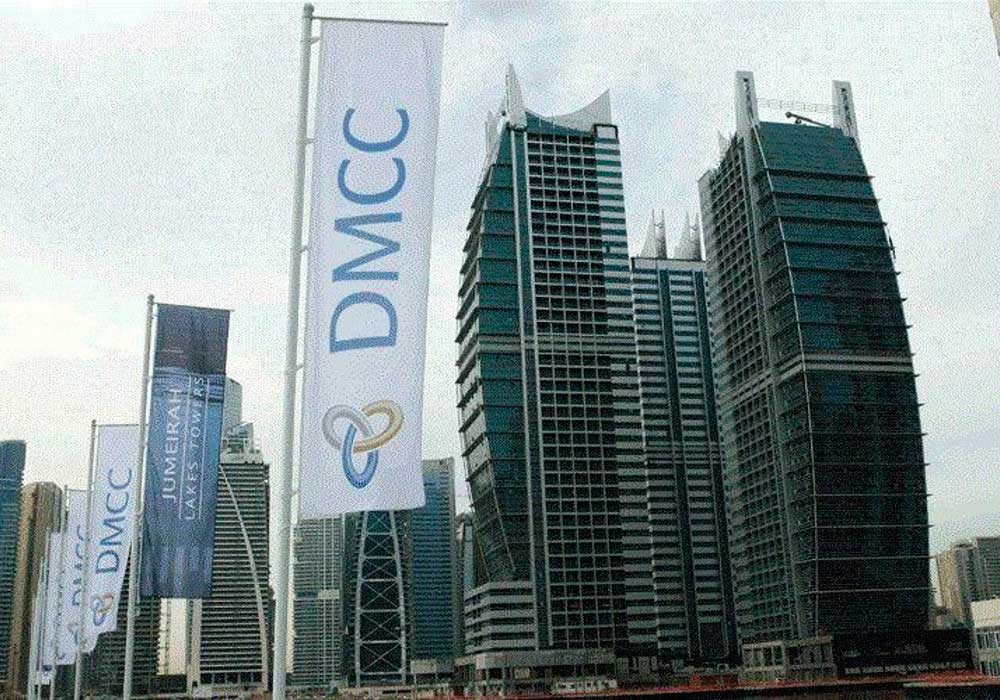
The client established a trading company in the DMCC—complete with an office, authorized capital, and visas for the team—as a turnkey solution.
