

If you own a company in the UAE, sooner or later, you will need to take care of protecting your business assets. Why is this necessary? To protect your earned capital from any claims, disputes, and unfair inheritance. In the UAE, the Sharia model applies by default: a son receives twice as much as a daughter, a wife is last on the list, and distant relatives can suddenly claim the main share.
If you want to take care of your family’s future or maintain confidentiality, one of the legal models — a nominee service, trust, or foundation — will help you do this. You will be able to determine in advance who will manage the assets and how, hide your name in public registers, and most importantly, separate ownership from control so that the assets are not subject to personal risks. In this article, we will explain the features of each legal structure in simple terms so that you can determine the right option for you.
What is a nominee service?
A nominee service (or nominee) is a service provided by legal, consulting companies, or family offices to conceal the true name of the owner. As a result, the company is formally managed by a nominal director or shareholder (sometimes also referred to as a nominee), who does not dispose of assets or make independent decisions. The nominee acts solely under the direction of the actual owner—the beneficiary.
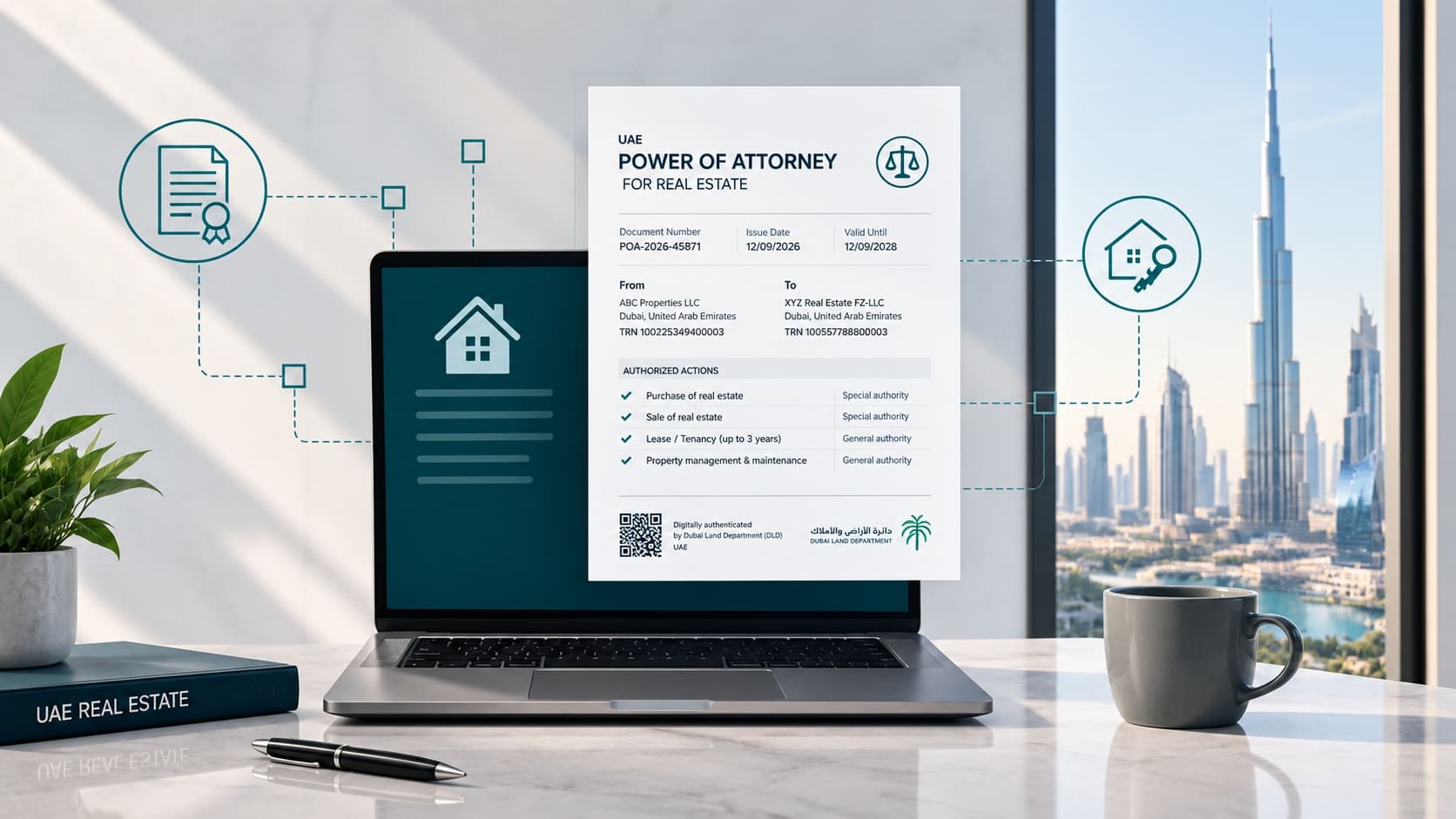
For legal protection, the owner issues a power of attorney to the representative. It clearly states which issues the nominee can decide on and which they cannot. In this way, the beneficiary retains the right to dispose of the assets.
Advantages of a nominee
The main advantage is the preservation of the owner’s confidentiality. Their name does not appear in official registers that are available for viewing by anyone: clients, counterparties, competitors, journalists.
In addition, the nominee service makes it possible to formally comply with the requirements of the jurisdiction. For example, when the owner wants to open a company on the mainland, and a local owner is required there.
It is also possible to simplify international transactions in this way, especially if the beneficiary is a non-resident.
Disadvantages of the nominal value
Please be advised that when choosing a nominee service, the protection of family assets in the Emirates remains uncertain. The fact is that in the UAE, the owner—not the director or nominee shareholders—bears responsibility for all actions. And if claims arise from counterparties, the court may well determine who actually controls the company.
A nominee arrangement is a tool for concealing the true owner, not for legal isolation. It does not protect against risks unless additional structures—such as a trust or a fund—are in place.
What is a trust — definition

A trust is a legal structure that is not a company. It is essentially a tool for asset management in the UAE and estate planning. It works something like this:
- Founder: transfers assets, sets rules for managing the company and distributing profits.
- Trustee: manages assets, makes decisions, acts strictly in accordance with the agreement.
- Beneficiaries: receive income, property, or other benefits under the terms of the trust.
The functions of a trustee may be performed by:
- a licensed company — a legal entity authorized to provide trust services;
- a professional administrator (legal entity, trust department of a bank);
- an individual with powers of attorney (lawyer, relative, trusted partner);
- a family office licensed to provide trust services.
It is the trustee who enters into agreements, manages assets, and signs contracts within the scope of the objectives specified in the trust agreement.
He or she may engage in commercial activities if this is provided for in the terms of the trust (for example, managing a business, renting out real estate, investing).
The transfer of management to a trustee is formalized through a trust agreement, which specifies the objectives, rules, terms, and rights of the parties.
A trust does not have legal entity status but is recognized as a separate legal structure. This means that the assets do not formally belong to either the founder or the beneficiary but are held in a “legal container” under the management of the trustee. Therefore, it is important to understand what a trust account is and how it differs from a corporate account opened for a company.
What is a trust account?
It is a bank account opened in the name of a nominee director, but marked as belonging to a trust. It is used to hold and manage assets, pay income to beneficiaries, make investments, and conduct other transactions. Such an account is separate from the manager’s personal funds and protected from his or her liabilities.
Trust fund — what is it?
A trust fund is synonymous with the term “trust,” which is more commonly used in journalism. It can also be referred to as an international trust fund if the assets, participants, or jurisdiction are located in different countries. Just like a trust, it is a key tool for estate planning in the UAE, capital protection, and owner anonymity.
Not to be confused with a trust investment fund
A trust investment fund is an instrument that allows the investments of many investors to be pooled. The funds are transferred to a company that has experience and access to the best services. This allows individual shareholders to participate in larger and more profitable projects and distribute investments among different assets. This way, individual costs can be reduced, such as commissions, legal, and administrative expenses. After all, banks and law firms offer separate service packages for investment funds. They are more expensive for a single investor, but cheaper for several.
The features of a trust investment fund are that it:
- has a public structure;
- is subject to investment legislation;
- distributes income in proportion to the investors’ share, rather than on an individual basis.
Strengths of a trust
Many people choose a trust because of the following advantages:
- Protection of the business from claims, disputes, and division of property.
- Confidentiality — beneficiaries and ownership structure are not disclosed publicly.
- Estate planning — assets no longer go through the courts as usual, but are distributed according to your will.
- Flexibility — you can specify any conditions: who receives income, when, and in what amount.
- Legal isolation — assets formally belong to the trust, not to an individual.
Weaknesses of a trust
Since a trust is not a legal entity, it cannot enter into contracts or dispose of assets. Given this, there is a certain dependence on the trustee: the trustee has access to the funds. If the person proves to be unreliable, there is a risk of abuse.
To avoid this, the trust agreement must be carefully drafted: powers, restrictions, control mechanisms, and replacement of the trustee in case of violations. If necessary, a protector (controller) can be appointed.
Who is a trust protector?
A protector is a controller appointed by the founder to supervise the actions of the trustee. They can:
- block or approve key decisions;
- initiate the replacement of the trustee;
- monitor compliance with the organization’s goals.
The protector does not directly manage the assets, but plays an important role in protecting the interests of the settlor and beneficiaries.
Business protection in the DIFC and ADGM zones — under English law
If you have not converted to Islam, you will most likely find it more convenient to open a nominee account, trust, or foundation in one of the following zones: DIFC (Dubai International Financial Centre) or ADGM (Abu Dhabi Global Market). These are the best jurisdictions for trusts and foundations: both zones operate under English common law, in full, without adaptations or interpretations. The rest of the UAE is governed by Sharia law, both in corporate and inheritance matters.
What are the advantages of the DIFC and ADGM jurisdictions for foreigners:
- the ability to create trusts and foundations with full legal protection;
- predictability and transparency in structuring ownership;
- protection of assets from personal and corporate risks;
- a comfortable environment for foreign founders and beneficiaries.
Which jurisdiction is better to choose:
 The DIFC zone
is suitable for those who are more interested in developing a business structure or investing. The DIFC regulator (authorized legal body) is more focused on issues related to commercial purposes: ownership of shares, stocks, asset management. Arbitration and the stock market are also well-developed in this zone.
The DIFC zone
is suitable for those who are more interested in developing a business structure or investing. The DIFC regulator (authorized legal body) is more focused on issues related to commercial purposes: ownership of shares, stocks, asset management. Arbitration and the stock market are also well-developed in this zone.
 The ADGM zone
is more suitable for those who are opening a family fund in the UAE or a trust for inheritance. The regulator here actively supports inheritance planning and the protection of company assets.
The ADGM zone
is more suitable for those who are opening a family fund in the UAE or a trust for inheritance. The regulator here actively supports inheritance planning and the protection of company assets.
What is a foundation in the UAE?
Unlike other structures, a foundation is an independent legal entity that can own assets. It is created under the founder’s charter, operates independently of the founder, and is managed by appointed persons. The founder does not directly own the foundation — its assets are legally separate from the founder’s personal property.
Advantages of a foundation
This legal structure is chosen because it allows you to:
- Avoid taxation, as the assets do not belong to an individual. This is particularly relevant if the foundation’s participants are residents of a country where there are taxes on property, inheritance, or capital gains.
- Protect property from claims, disputes, and risks. A foundation is ideal for protecting a company’s assets, as it is a separate legal entity that owns the assets directly. And the property transferred to the foundation is legally separate from the founder. This means that it cannot be seized or confiscated for the founder’s debts, and it is not involved in inheritance disputes or divorce proceedings.
- Plan the transfer of inheritance. The foundation allows you to specify in advance who will inherit the property and how, without the intervention of Sharia law or other courts, taking into account the rights of beneficiaries and the possibility of appointing managers, observers, and distributors. This allows you to protect the interests of your family or business.
- Own a business and real estate confidentially. The foundation can own shares, stocks, real estate, and bank accounts. At the same time, the name of the founder is not disclosed in public registers. The foundation acts as an independent entity. The structure is transparent to the regulator but closed to external requests without a court order. This reduces risks associated with publicity, reputation, or even politics.
- Raise your status and international recognition. A foundation is a fully-fledged structure recognized by courts and banks. Therefore, it is used in international agreements, investments, and inheritance. This increases the trust of counterparties, investors, and partners.
Disadvantages of a foundation
What may discourage you from choosing this structure:
- High cost of establishment and maintenance. Establishing a fund is more expensive than registering a regular company or trust. Additional fees are charged for the services of managers, administrators, auditors, as well as accounting and legal support.
- Complexity of maintenance. Certain procedures must be followed: maintaining internal documentation with the charter, resolutions, reports, and appointing managers, observers, and distributors.
- Limited control over funds. The founder cannot dispose of assets, as there is no mechanism for direct withdrawal of funds, only through managers and strictly in accordance with the charter. In addition, the fund is not intended for active commercial activities or rapid monetization. It is created to protect and preserve capital.
- Transparency in international transactions. The manager’s complete confidentiality is maintained in the UAE. However, in cross-border transactions, the fund (foundation), like other companies, is subject to CRS (automatic exchange of tax information) and bank requirements for disclosure of structure.
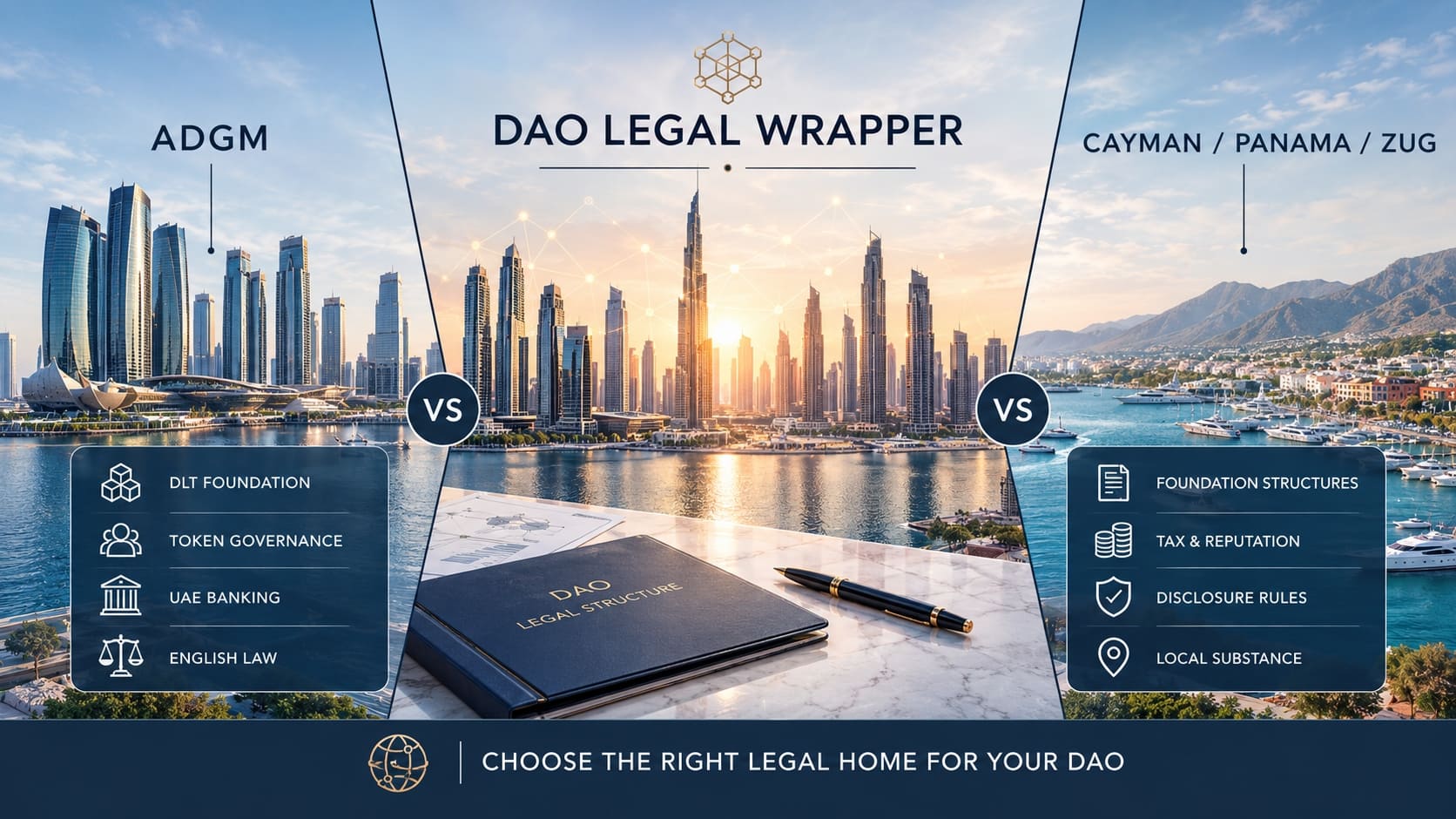
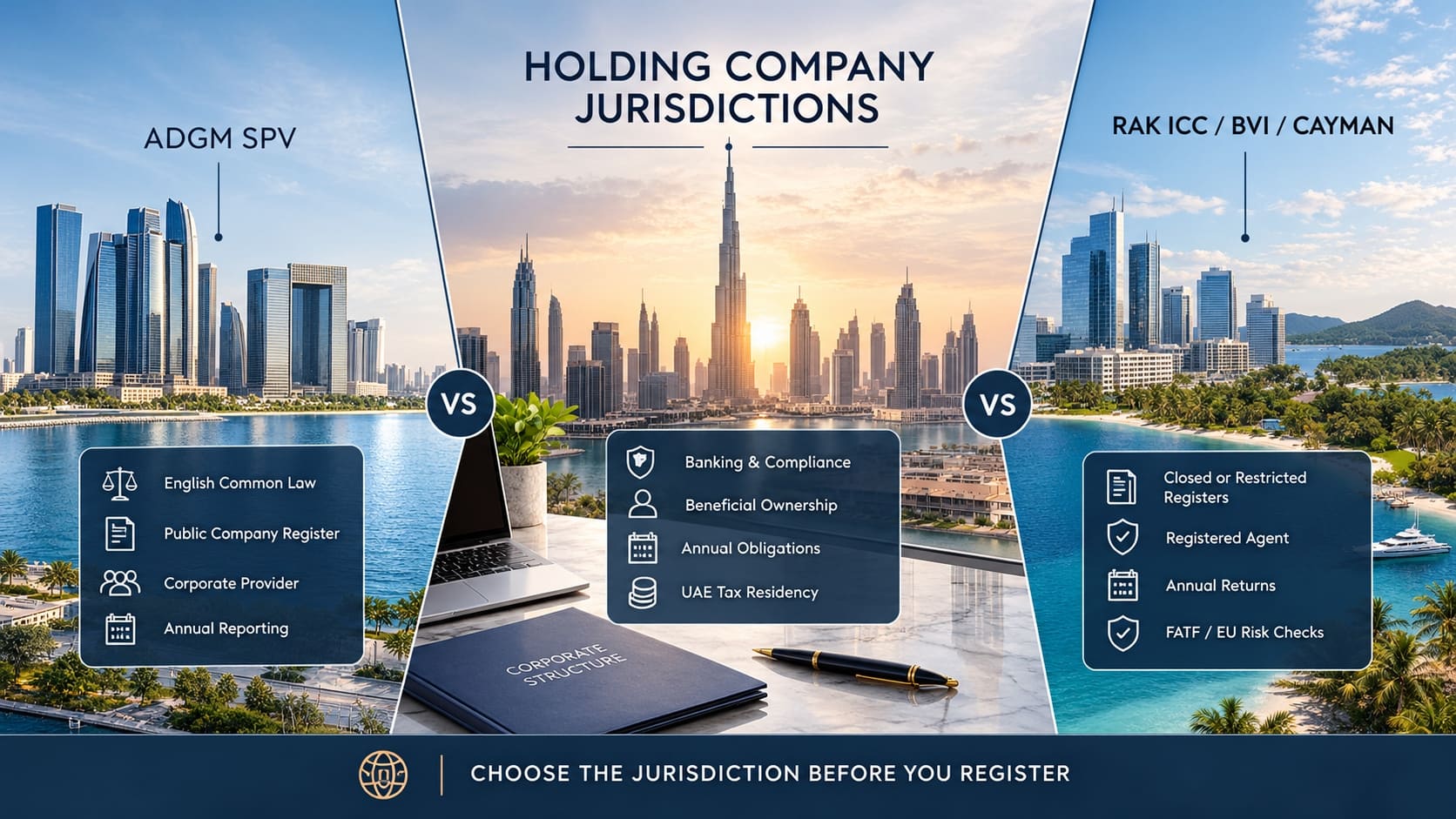
Jurisdictions for the foundation: DIFC, ADGM, RAK ICC

There are three key jurisdictions in the UAE where a fund can be registered. Each has its own characteristics, focus, and level of international recognition.
DIFC Foundation
A structure created in the Dubai International Financial Centre is distinguished by high legal protection and prestige. It is suitable for those who build complex investment and corporate structures, manage assets, and own businesses through a foundation. Registration here is more expensive and maintenance is more complicated than in other zones. But in return, you get access to DIFC Courts of arbitration (operating under English law), international recognition, and the trust of banks.
This structure is the most flexible, easily scalable, and legally stable. Therefore, it is used in cross-border transactions, investments, and capital protection, as well as in inheritance planning.
ADGM Foundation
The Abu Dhabi Global Market Foundation is best suited for estate planning in the UAE and protecting family assets. The structure allows you to set inheritance terms in advance, appoint distributors, protect assets from disputes, and maintain privacy.
The ADGM Foundation is internationally recognized and supports the ownership of digital assets, tokens, and intellectual property. It can also be integrated with trusts, family offices, and corporate structures. It is suitable for those who are building long-term capital protection rather than conducting operational business.
RAK ICC Foundation
An organization in the jurisdiction of Ras Al Khaimah is a practical choice for those who need basic asset protection without a complex legal infrastructure. The instrument is suitable for real estate ownership, inheritance, and confidential property registration.
Unlike DIFC and ADGM, there is no access to international arbitration, the charter is drafted in accordance with local regulations, and the structure itself has less recognition in international agreements. However, the RAK Foundation remains a working tool: it is easy to set up, inexpensive to maintain, and convenient for private tasks. For example, where unique legal regulation or interaction with large banks and investors is not required.
Comparison: nominee, trust, foundation
Many of our clients ask themselves: nominee, trust, or foundation — which one better protects assets and anonymity? To better understand the difference between these structures, take a look at our table, where everything is clearly explained.
| Criterion | Nominee | Trust | Foundation |
|---|---|---|---|
| Legal entity | No | No | Yes |
| Ownership of assets | In nominal value | In trustee | In fund |
| Founder control | De facto, but not de jure | Through trust conditions | Through the charter and managers |
| Level of asset protection | Low | Medium | High |
| Hereditary planning | Absent | Available | Available |
| Confidentiality | Partial | Partial | Full (within jurisdiction) |
| Structural flexibility | Minimal | Moderate | High (especially in ADGM, DIFC) |
| Recognition in international practice | Low | High | High (depending on jurisdiction) |
| Cost of creation and maintenance | Low | Medium | Medium/high |
| Opportunity to own a business | Formally — yes | Through a trustee | Directly |
| Access to arbitration and legal protection | No | Yes (in DIFC, ADGM) | Yes (in DIFC, ADGM) |
Conclusions: level of asset protection and confidentiality
Nominee — a technical tool for concealing the owner, but it does not provide legal protection. Assets formally belong to the nominee. But risks remain: seizure, disputes, loss of control — all possible. A nominee is more of a cover from competitors and public attention, nothing more.
A trust is a more reliable structure: assets are transferred to a trustee, and the founder retains influence through a power of attorney with a nominee director. It is suitable for inheritance and protection from disputes, but requires trust in the manager or arrangements for his control through a protector.
A foundation is the most secure structure and the most expensive to maintain. The assets belong to the foundation itself, the founder establishes the rules through the charter, appoints managers, distributors, and observers. In jurisdictions such as ADGM and DIFC, the foundation is recognised by courts and banks, used in international agreements, and provides maximum protection against claims, debts, and inheritance conflicts.
What is best for your needs?

If you want to avoid unnecessary media attention and not appear in public databases as the owner of the company, choose the nominee service. This is especially relevant when registering a company on the mainland with the participation of a local partner. A nominee director in Dubai will act on your behalf, interacting with banks, agents, and counterparties. You will be able to manage the business remotely, but key decisions, documents, and profits will remain under your control as the beneficiary.
If your goal is to pass on property and retain control over assets, decide a trust. It allows you to set inheritance terms, protect assets from disputes, and retain influence through a trustee. Suitable for family planning and long-term capital transfer.
If you want to obtain full legal protection, preserve assets and eliminate risks, select a foundation. It is an independent legal entity that owns assets, operates under its charter and is independent of trustees. In jurisdictions such as ADGM and DIFC, a foundation provides maximum protection, confidentiality, and recognition in international practice.
If you have any further questions, such as how to open a particular structure or where to find nominee shareholders in the UAE, please contact us. We will provide you with more detailed information during our legal consultation.