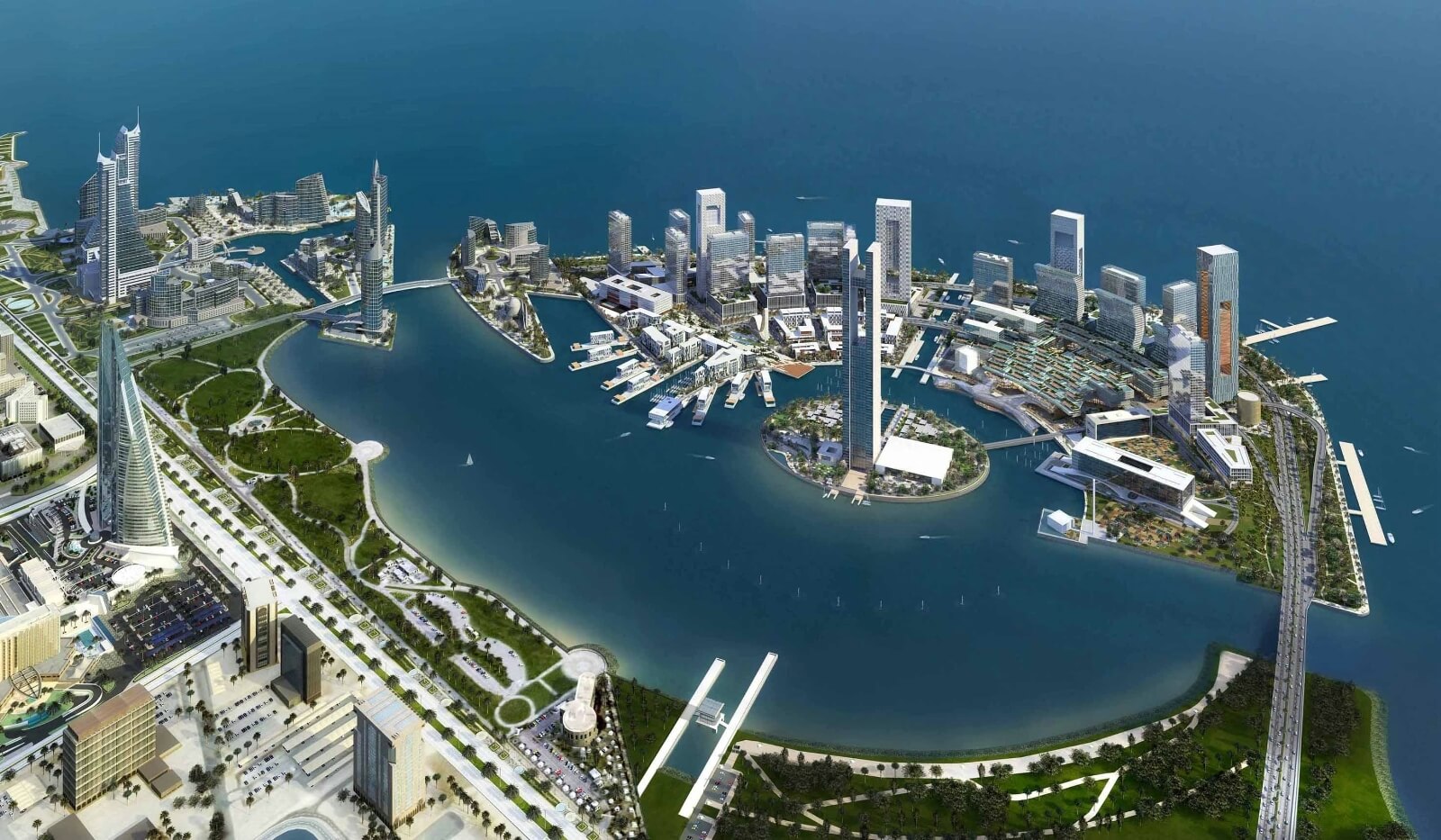


Below we break down, step by step, how to open a company in Bahrain: which legal forms exist, what it costs, which taxes apply in 2026, and the documents you will need. We also cover the free zones and, just as important, when they genuinely make sense versus when mainland registration is the smarter play.
Why Bahrain Works as an Alternative to the UAE
Bahrain is one of the very few countries in the region where a standard company pays no corporate tax at all. While the UAE charges 9% on profits above a threshold and Saudi Arabia charges 20%, most activities in Bahrain sit at zero. The exception is the oil and gas sector and hydrocarbon extraction, where the rate is 46%.
Business setup in Bahrain suits international trading and logistics companies especially well. Where UAE operations can run into compliance friction, transfer limits, and tax, a Bahrain company can trade across the country at a zero rate. The jurisdiction is equally attractive to IT firms that need to accept payments from clients worldwide.
There are practical wins too. A corporate account is easier to open, office requirements are light, and running costs come in below the Emirates. Most activities need no local partner, procedures move online through the government Sijilat platform, and the investor receives a residency visa when the company is formed.
Advantages of Registering a Business in Bahrain
Bahrain runs a stable economy and builds a comfortable environment for international companies. Planning growth and working with overseas markets from here is simpler than from many neighbouring jurisdictions. The main advantages of business setup in Bahrain include:
- 100% foreign ownership. For most activities no local partner is required — the investor controls the company outright.
- Moderate competition. The market is not yet saturated, and in several niches the field of large players is thin, so newcomers find it easier to establish themselves.
- A strong financial centre. Bahrain has long been one of the leading banking hubs of the Gulf, with predictable access to international settlements.
- Business culture and English. Government services and banks are built around expats, and communication runs in English.
- Comfort and safety. The cost of living is lower than in neighbouring states, the legal system is stable, and crime is low.
Bahrain Free Zones and 100% Ownership
Many founders go looking for a “Bahrain free zone” by analogy with the UAE, but the logic here is different. In the Emirates, free zones were created in part to enable 100% ownership. In Bahrain that ownership is available on the mainland for nearly every sector, so most trading, consulting, and IT companies do not need a free zone at all — they register directly through Sijilat.
Free zones are built for manufacturing, logistics, and export. The key sites are the Bahrain International Investment Park (BIIP), the Bahrain Logistics Zone next to Khalifa Bin Salman Port, and the zone at the international airport. They offer exemption from customs duty on raw materials and equipment, ready industrial infrastructure, and proximity to transport hubs.
The takeaway is straightforward: a service, trading, or digital business is better off with full-ownership mainland registration, while a manufacturer or a large logistics operation importing raw materials should look at a dedicated free zone.

Legal Requirements to Open a Company in Bahrain
Getting a CR and Choosing Activities
To trade legally, a company obtains a CR — its Commercial Registration number. Without it you cannot open a bank account, lease an office, or hire staff. During registration the founder selects activities from the Sijilat catalogue, and each entry goes through approval: commercial lines are confirmed by the Ministry of Industry and Commerce (MOIC), while licensed fields are additionally vetted by the relevant regulators — the CBB (Central Bank of Bahrain) for finance and fintech, MOH for healthcare, MOE for education, LMRA for the labour market and visas, and the Industrial Areas Directorate for industrial zones.
Once the activities are approved, the company receives its CR number and moves on to licences. Approval times depend on the authority — anywhere from 1 to 7 working days.
A word of caution: trading without a CR, or with the wrong activities on file, invites penalties and licence revocation. Banks cross-check actual operations against the CR profile, and any mismatch is grounds to freeze transactions.
Choosing a Legal Form
The legal form sets your ownership structure, capital requirements, and governance rules. Bahrain uses several main forms, each suited to a different job. Here they are, summarised in a table below.
- W.L.L. (With Limited Liability) — the most popular choice for SMEs, services, IT, and consulting. It allows one or more participants and requires no fixed minimum capital for unregulated sectors.
- SPC (Single Person Company) — for those launching a business alone with limited liability. It registers with token capital where the activity is not licensed, and a single founder is enough.
- B.S.C. (Bahrain Shareholding Company) — the joint-stock form for large projects, investment funds, and regulated activities. A closed BSC requires capital from BHD 250,000, a public one from BHD 1,000,000, plus a board of directors and more demanding reporting.
|
Parameter |
W.L.L. |
SPC |
B.S.C. |
|---|---|---|---|
|
Best suited to |
SMEs, services, IT |
A sole owner |
Large and regulated projects |
|
Participants |
1 or more |
1 |
Shareholders + board of directors |
|
Minimum capital |
Not fixed (unregulated sectors) |
Token |
From BHD 250,000 (closed) |
|
Liability |
Limited |
Limited |
Limited |
Some licensed fields — fintech, investment, insurance — permit only the BSC form or require higher capital. For a small service business, a WLL company in Bahrain or an SPC is usually the best fit.
Office Requirements
Every company must hold a registered address in Bahrain. Three formats are accepted: a traditional office, a Flexi-Desk (a workstation in a business centre), and a Virtual Office (an address with no physical presence). The choice affects the licence type: financial and medical activities need a full office, while consulting or IT can run on a virtual address. We work with business centres that provide dedicated addresses for the entire life of the CR.
Activity-Related Risks
Your chosen activity directly drives how complex registration will be. Finance, medicine, education, industry, and HR services go through pre-approval with the relevant authorities — CBB, MOH, MOE, LMRA, or the Industrial Areas Directorate. Regulated lines such as fintech, investment, and insurance impose extra requirements on capital, governance, and internal policies. Meanwhile working with equipment, storing materials, and running warehouse space call for sign-off from the Industrial Areas Directorate and compliance with technical standards. A mistake here costs time and money, so the activity codes are best left to a specialist.
Get a consultation from a licensed professional now to avoid common mistakes in the future!

Documents Needed to Register a Business in Bahrain
Documents for Filing
The investor prepares a pack to submit to MOIC through the Sijilat system:
- constitutional documents — the company’s Memorandum and Articles of Association (we prepare these turnkey);
- passport copies of all founders, shareholders, and the appointed manager;
- capital details — proof of contribution and the share split;
- an office lease agreement — a registered address is mandatory for the licence;
- a registration application stating the activities;
- pre-approvals for regulated fields (where required).
Without a complete pack MOIC will not issue the CR, and without a CR the company cannot open an account or start trading.
Documents After Preliminary Approval
Once preliminary approval is granted, the investor submits the documents needed to complete the process:
- confirmation that a corporate bank account has been opened;
- appointment of a manager with signing authority;
- sector-regulator licences for specific activities;
- investor and family visa documents through the LMRA;
- notarised translations of all documents into English or Arabic.
At this stage the company is checked for compliance with the chosen licence. Errors in the documents lead to delay or refusal, so it pays to assemble the pack in advance.
The Registration Procedure in Bahrain
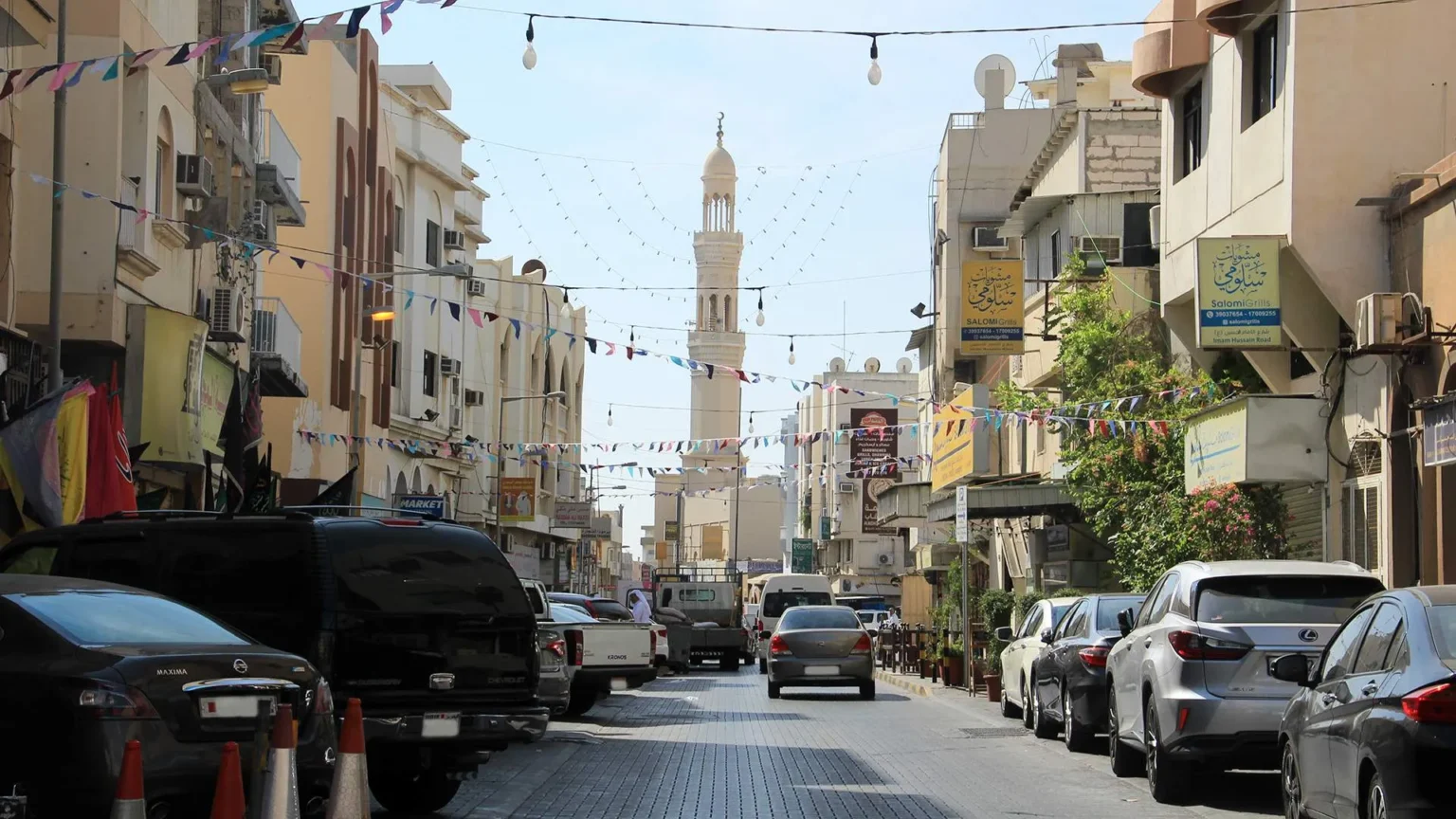
Registration runs online through Sijilat and consists of six sequential steps:
- Prepare the constitutional documents — passports, founders’ resolutions, articles, memorandum, and proof of address (a corporate founder adds its corporate documents).
- Choose the legal form and file for the CR — settle on the structure (WLL, SPC, or BSC), enter the participants’ details; the application goes to MOIC.
- Select the activities — the founder ticks the categories in Sijilat, and the system routes them to the relevant authorities for review.
- Arrange the licences — once approved, access opens to the required licences; sometimes proof of a specialist’s qualifications is needed.
- Register the legal address — the office or workstation address is entered.
- Receive the CR — after the details are verified, the company is issued its Commercial Registration number.
The whole process takes anywhere from a few days to two weeks, depending on the activity and the approvals involved. Application status is visible in Sijilat in real time.
Submit a request to receive expert assistance at any stage of the registration process or for a “turnkey” solution!
Timeline to Register a Company in Bahrain
Thanks to the online system the process moves quickly, and the speed depends on the activity and regulator approvals. Filing the documents and choosing the form take 1–2 working days, activity review usually 2–5 days, and licensing anywhere from a few hours to 3–5 days, with the CR issued as soon as every stage clears.
Standard service categories register faster. Licensed fields — finance, medicine, education, industry — require extra review, so timelines stretch. Errors in the paperwork lengthen the process too, which is why specialist support saves weeks.

How Much It Costs to Open a Company in Bahrain
The cost to set up a company in Bahrain usually lands between BHD 1,600 and BHD 4,300 (≈ USD 4,240–11,400) for a standard registration with basic licences. Government fees are modest (as of 2026, from BHD 25 to BHD 1,000 depending on the activity); the office and professional support make up most of the budget.
|
Cost item |
Indicative cost |
Depends on |
|---|---|---|
|
Registration (CR) and trade licence |
BHD 1,600–4,300 (≈ USD 4,240–11,400) |
Company type, number of founders, set of activities |
|
Name reservation and admin fees |
BHD 50–200 (≈ USD 130–530) |
Number of activities, extra confirmations |
|
Bank account opening |
from BHD 1,100 (≈ USD 2,900) |
Minimum deposit, ownership structure, KYC |
|
Office (legal address or physical) |
from BHD 225 (≈ USD 600) |
Location, office format, licence requirements |
|
Accounting and support |
BHD 50–150/month (≈ USD 130–400) |
Volume of operations, VAT reporting |
Annual renewal of the CR and licences costs roughly the same as the initial registration, and for service companies it sits at the lower end. A virtual office is markedly cheaper than a physical one, so the final budget hinges on how you plan to operate.
All the figures above are indicative. Every project is different, and the final cost is built around the specific client: the legal form chosen, the set of activities, the office and licence requirements, the ownership structure, and the depth of support. That is why service fees shift from project to project — there is no one-size-fits-all price list here. We put together an exact quote for your case after a short consultation, once your business goals and registration scenario are clear. That way you pay for the work you actually need, with no markup for options you will never use.
Taxes in Bahrain in 2026
Bahrain’s tax system is engineered to attract foreign capital, so the burden on most companies is minimal. There is no personal income tax in the country at all. The main corporate charges look like this:
- Corporate tax — 0%. For every kind of business except the oil and gas sector and hydrocarbon extraction, where the rate is 46%.
- VAT — 10%. Registration is mandatory at annual taxable turnover from BHD 37,500 and voluntary from BHD 18,750.
- Customs duty — around 5% of the CIF value; higher for certain categories (alcohol, tobacco).
- Tax on dividends, interest, and royalties — 0%. There is no withholding tax in Bahrain.
One important note for large groups. For financial years beginning on or after 1 January 2025, a DMTT — a Domestic Minimum Top-up Tax of 15%. applies. It reaches only multinational enterprise (MNE) groups with global consolidated revenue of at least €750 million and does not apply to local businesses without foreign operations. A de minimis exclusion also applies: where the Bahrain entities’ revenue is below €10 million, the tax is generally nil. For an ordinary small or medium business, the effective rate on profit stays at zero.
|
Tax |
Rate |
Comment |
|---|---|---|
|
Corporate tax |
0% (46% oil & gas) |
Zero for ordinary business |
|
DMTT (large MNEs) |
15% |
Only groups with revenue ≥ €750M, from 2025 |
|
VAT |
10% |
Registration from BHD 37,500 turnover |
|
Withholding tax |
0% |
No tax on dividends, interest, royalties |
Requirements vary with the activity and the company’s regulated status, so the precise picture is best confirmed at a consultation.

How Dynasty Business Adviser Supports You
Bahrain company formation is a set of technical, administrative, and banking procedures, and we take them off your hands so the launch is fast and error-free. Our support covers:
- preparing the constitutional documents and filling in the Sijilat forms;
- selecting activities in line with regulator requirements;
- support through KYC and bank account opening;
- obtaining visas for founders and staff;
- administrative handling all the way to the CR.
We work turnkey, or in a partial format when you only need help at certain stages. The owner’s involvement is needed at specific points: identity verification, signing forms, and personal documents. This kind of support speeds the process up several times over and cuts the risk of refusals.
Ready to Open a Company in Bahrain?
Bahrain offers a rare combination: zero corporate tax for ordinary business, 100% ownership, and fast online registration with a direct line into Gulf markets. Talk to Dynasty Business Adviser — we will pick the legal form, assemble the document pack, and see the registration through to the CR without errors or delays.
Get a consultation: ☎️ +971 52 634 1022 · info@dynasty-uae.com
Disclaimer: this material is for information only and is not legal or tax advice. Tax rates, thresholds, and licensing requirements can change. Confirm the current terms for your activity at an individual consultation.