

Consider a common scenario: your company supplies goods to Germany while simultaneously scaling sales into the Saudi Arabian market. Your German partners require a European registration and a transparent IBAN account, while your Middle Eastern counterparties expect a physical presence in the MENA region, an understanding of local business culture, and settlements in UAE dirhams (AED) or US dollars.
Handling these tasks within a single jurisdiction is difficult, which is where the international “Cyprus + UAE” structure comes in. Its advantages are already being actively used by entrepreneurs in trade, IT, consulting, and investment. They build international groups of companies where each jurisdiction plays its own role: Cyprus provides a European foundation, while the UAE offers operational flexibility and a minimal corporate tax.
In this article, we’ll break down how structuring a business through Cyprus and the UAE works, in which cases such a scheme is justified, and when it’s better to replace it with an alternative model.
Why Do Businesses Use the “UAE + Cyprus” Combination?

Cyprus and the UAE are relevant for a business that needs the advantages of both jurisdictions. On their own, each covers only part of the needs of an international business. Let’s look at each country.
The Main Advantages of Cyprus
A company registered on the island is a full-fledged resident of the European Union with access to the SEPA payment infrastructure, a VAT number, and the ability to work with counterparties who, for whatever reason, don’t want to deal with anyone outside Europe. Cyprus also offers other benefits:
- the legal system is based on English common law, fully understood by international partners;
- the tax rate for small and medium-sized businesses is only 12.5%, while large international groups with turnover above €750 million pay the standard 15%;
- the island has a broad network of double taxation treaties covering more than 65 countries.
Cyprus offers unique conditions for IT companies and holders of intellectual property. For them, the tax on income from licenses and royalties starts at 2.5%.
The Advantages of the United Arab Emirates
There is no personal income tax in the UAE, and the corporate tax for companies with profits above AED 375,000 has been 9% since 2023. In free zones, subject to certain conditions, businesses can be entirely tax-exempt.
Dubai and Abu Dhabi are powerful financial centers and operational hubs for working with Asia and Africa, without currency controls and with fast transaction processing. Currency risk is minimized because the dirham is firmly pegged to the US dollar.
In addition, the United Arab Emirates has its own sovereign legal system. Local residency combined with proper structuring of an international business ensures a high level of privacy and protection from unwarranted external pressure.
Important! Using the “Cyprus + UAE” combination doesn’t mean creating two separate companies in each country. It’s about dividing functions so that each jurisdiction operates where it has a genuine advantage.
How the Structure Works in Practice?
There’s no universal scheme for how the international “Cyprus + UAE” structure works — everything depends on the specific goals of the business owner, the nature of the commercial activity, and the profit flows. That said, there are several practical scenarios.
Scenario 1. A Cyprus Company as the Holding, the UAE as the Operating Unit
This is the most popular model: the Cyprus legal entity holds shares in the UAE company and acts as the holder of assets (investor agreements, intellectual property, stakes in other businesses). Hiring staff, signing contracts with clients, and making sales are carried out through the free-zone company, for example, one based in Dubai.
The profit earned can be distributed as dividends to the Cyprus holding company. If you have a real office with directors on the island, these payments are not subject to additional tax.
Scenario 2. Cyprus for Europe, the UAE for the Rest of the World
In this model, two companies operate in parallel, each with its own client base. Contracts with European customers are signed through the Cyprus entity, invoices are issued in euros, and payments are accepted via SEPA — all within the framework of European law.
The company registered in the UAE serves clients from South and Southeast Asia, Africa, and the Persian Gulf, operating in dirhams and US dollars. The group is managed by a board of directors or a management company from any jurisdiction.
Scenario 3. The UAE as the Profit Center, Cyprus for Asset Protection
This scenario is usually chosen by IT businesses with licensable intellectual property. Software, patents, and trademarks must be held on the balance sheet of the Cyprus company. The UAE company merely licenses these rights and pays royalties to Cyprus.
Products developed on the island fall under the preferential IP Box regime: instead of the standard 12.5%, a special tax rate starting at 2.5% applies. This is a legal mechanism actively used by many international IT companies.
In any of the scenarios described, the key factor is where management decisions are actually made. If, in practice, the entire business is managed from a single jurisdiction, the “Cyprus + UAE” combination won’t provide any particular advantages for an international business — neither legal nor tax-related.
Tax Burden in the “Cyprus + UAE” Structure
Many people choose the hybrid “Cyprus + UAE” structure hoping to automatically get a zero rate on everything. In practice, business owners face a different reality: there is a tax burden in both jurisdictions, and it depends on the specific configuration of the business. The table below shows the current figures for the two tax regimes.
| Parameter | Cyprus | UAE |
|---|---|---|
| Corporate tax | 12,5 %; 15 % for groups with annual turnover above €750 million | 0 % 9 % on profit above AED 375,000 per year |
| VAT | 19 % (standard EU rate) | 5 % domestically; 0 % on export of services and international trade |
| Withholding tax on outgoing dividends | 0 % when paid to non-EU residents | 0 % |
| Royalty tax | From 2,5 % under IP Box; 12,5 % standard rate | 0 % in free zones |
| Capital gains tax | 0 % (except profit from Cyprus real estate) | 0 % |
| Network of tax treaties (DTT) | 65+ countries, including the whole EU | 140+ countries |
One of Cyprus’s main advantages is the so-called participation exemption regime, under which dividends received by a Cyprus holding company from an operating company in the UAE are fully exempt from corporate tax on the island. At least one of the following conditions must be met:
- the holding company owns at least 1% of the subsidiary’s capital;
- the subsidiary in the UAE earns income from active operating activity (services, trade, IT) rather than from passive sources (such as loan interest).
In the Emirates, the situation has become somewhat more complex since 2023, although the zero rate remains available in free zones (SEZs) subject to certain conditions:
- maintaining full accounting records and an annual audit;
- maintaining an adequate level of economic presence (office, staff);
- earning qualifying income from permitted activities: international trade, holding operations, IT development, ship management.
Internal transactions between the European and UAE companies are closely monitored by the tax authorities of both countries. All payments must comply with the arm’s length principle — that is, be conducted at market prices without reference to related-party relationships.
But building a legal model on paper is one thing, and making it actually work is another. It’s important to figure out early on which banks to open accounts with for both companies, how to pass currency controls, and how to properly handle settlements in euros, dollars, and dirhams.
Banks and International Settlements

Opening a bank account is one of the most important and time-consuming stages of building an international “Cyprus + UAE” structure. It’s the banks that assess the economic logic of transactions between the two jurisdictions, and it’s their approval that determines whether money moves or gets blocked.
By registering a company in Cyprus, you gain access to the European banking system. You’ll be able to open a euro account, use SEPA transfers, and access top payment systems such as PayPal. An important bonus is that you receive “EU company” status, which is essential for large European tenders and for signing contracts with EU government bodies.
However, it’s important to keep in mind that in 2026 the major Cypriot banks (Bank of Cyprus, Hellenic Bank) operate more conservatively. If your company has no physical office in Cyprus, and the directors and beneficiaries are not island residents, the chances of opening an account are slim. Banks may request information on the legal origin of funds or proof of business activity.
When building a business between Europe and the Middle East, IT and international trade companies often choose European neobanks and licensed e-money institutions. These payment providers offer full IBAN accounts and SEPA access, but on more flexible terms.
In the UAE, the choice of banks is much wider (Emirates NBD, Mashreq, FAB, ADCB, Wio), and Dubai is generally considered a regional financial hub. But here too you’ll need to provide information on the source of funds, the origin of your initial capital, the nature of your business operations, the geography of your counterparties, and whether you have a real office and staff in the jurisdiction.
You may be denied an account even without an official explanation. That’s why it’s advisable to have professionals handle the preparatory work and document collection. They can also help protect you from other risks.
Requirements and Risks You Should Know About
For a holding company in Cyprus and an operating company in the UAE to function without problems, you need to adhere to the concept of economic substance. Both jurisdictions require genuine business activity in the country of registration. International tax authorities and banks have learned to quickly identify artificial structures created for the sole purpose of avoiding taxes.
Below is a list of four of the most critical mistakes that can lead to serious problems.
- Management from a third country. If your company is registered in Cyprus but its beneficial owner is located in Germany or Poland, the tax authorities of that country may recognize you as a tax resident there. This would result in additional profit tax being assessed at the rates of the founder’s country of residence — an extra expense.
- Using the UAE as a “mailbox.” Using a free-zone company as a transit node for issuing commercial invoices to a buyer, without a real office, can lead to your bank account being closed after the first annual review. European tax authorities may deem such transactions fictitious.
- Ignoring Controlled Foreign Company (CFC) rules. In countries with strict CFC legislation, you’re obligated to formally declare your shares in both the Cyprus holding company and the UAE subsidiary. If you fail to do so, banks in Cyprus and the UAE will automatically pass this information to tax authorities under the Common Reporting Standard (CRS), and sanctions will follow.
- Chaotic intra-group agreements. Any transfer of funds between your companies must be backed by documentation. Banks treat a payment without a contract and a service completion certificate as suspicious, and tax authorities will see it as a hidden distribution of profit.
Mistakes in the structure are costly: from higher taxes and fines to account closures and reputational damage. International tax authorities have long been exchanging information under the global Common Reporting Standard (CRS), so nothing goes unnoticed. You need to decide from the outset whether the “Cyprus + UAE” structure is right for you, so you don’t waste time or money.
Who Is the “Cyprus + UAE” Structure Suited For, and Who Should Avoid It?
The hybrid business model is a powerful but fairly expensive tool. It shouldn’t be built for the future or for the sake of prestige. The “Cyprus + UAE” combination is justified only if the business has genuine operational needs in both markets, and the administrative costs of running it don’t eat up the tax savings. Take a look at the table below to see whether this structure suits you.
| Type of business | Is this okay? | Basis |
|---|---|---|
| IT and SaaS companies with clients in the EU and the Middle East | Yes | Cyprus for the European Union, the Emirates for the rest of the world |
| International groups of companies, holdings, investment structures | Yes | Cyprus is suited for holding assets, the UAE for trade and financial operations |
| Consulting companies serving two markets | Yes | Contracts divided by geography |
| Trading companies with supplies in both directions | Yes | Different counterparties, different jurisdictions |
| Small businesses with annual turnover under US $200,000 | No | The structure’s costs won’t pay for themselves |
| Freelancers or sole proprietors without corporate clients | No | A single well-chosen jurisdiction will cover all needs |
| A company with clients only in the EU or only in the Middle East | No | Choosing two jurisdictions will only complicate matters |
So the “Cyprus + UAE” structure is justified if you’re doing business in both regions at once and your turnover exceeds $300,000–500,000 (ideally from $1 million per year). If you’re not operating in both markets simultaneously, or you haven’t yet reached these figures, it’s better to abandon the idea of “living” across two jurisdictions.
How Much Does the “Cyprus + UAE” Structure Cost?

Two companies mean roughly double the expenses. To keep the structure from turning into a cash-flow drain, the budget needs to be calculated down to the last detail. The main cost items:
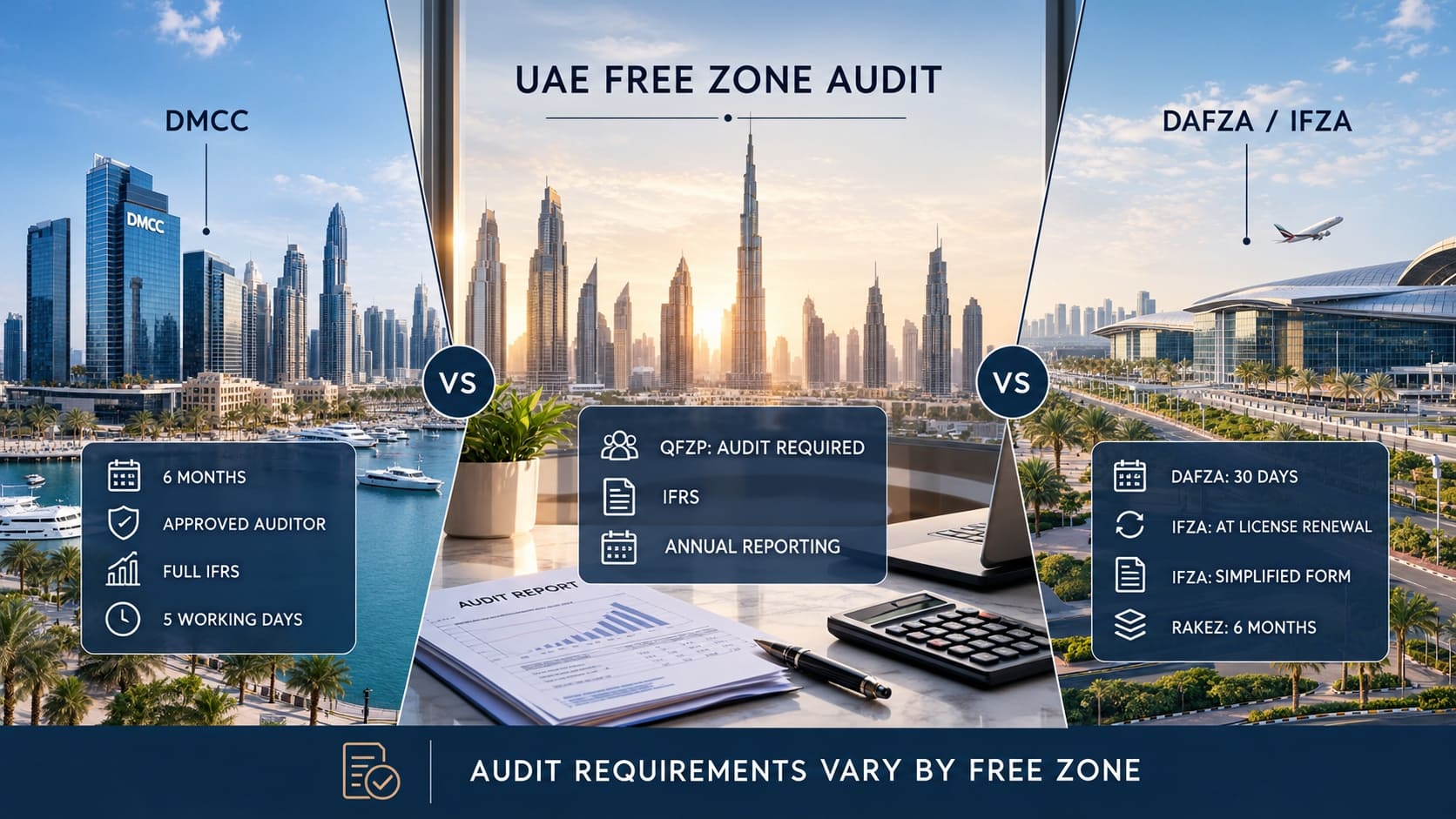
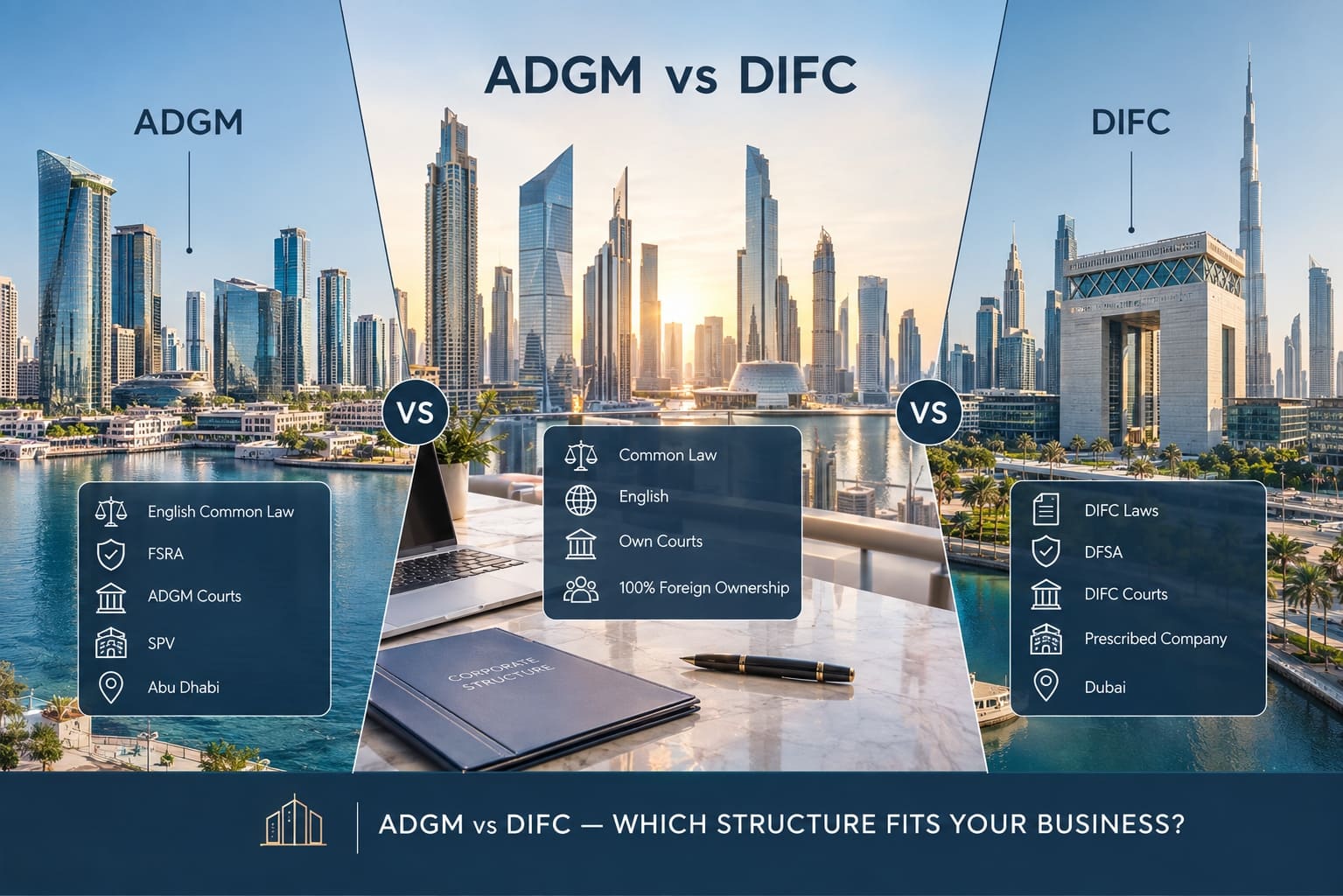
- Registration. Setting up a company in Cyprus costs from $3,500 to $5,500. This includes government fees, registered-agent services, preparation of incorporation documents, and a basic registered address. Registering a company in a UAE free zone costs from $4,500 to $20,000. Each zone (Meydan, DMCC, ADGM, DIFC, Ajman) has its own fee schedule.
- Annual expenses. These include maintaining the registered address, resident or nominee director services, bookkeeping, mandatory audit in Cyprus, license renewal in the Emirates, and corporate support. Depending on the complexity of the structure, turnover, and the set of services used, expect to pay roughly $8,000–20,000 per year.
- Banking support. Professional consultant services for opening bank accounts cost $1,500–3,000. Of course, you can open an account yourself, but it takes noticeably longer and carries a high risk of refusal.
If your turnover exceeds $500,000, it’s worth thinking about how to split your business between Cyprus and the UAE. If you’re currently a startup owner with unconfirmed revenue, it’s better not to rush and to consider other options.
Alternatives to the “Cyprus + UAE” Structure
Besides the “Cyprus + UAE” structure, international businesses can choose other solutions that sometimes work just as well, or even better. If your clients are in Europe and you have no plans to enter the Middle Eastern market, it’s reasonable to limit yourself to Cyprus alone, for example. You can return to the question of a second jurisdiction when the need arises.
For businesses that are globally oriented but not focused on the European Union, consider Singapore or Hong Kong. These jurisdictions have a strong reputation and straightforward banking services.
Do you need purely a holding structure without operating activity in the EU? Then consider Malta, the Netherlands, or Luxembourg. They offer tools similar to Cyprus, but with a different banking environment and business reputation.
For some business models, a single UAE company is enough — especially if clients don’t require European registration and settle in dollars or dirhams. It’s simpler, cheaper, and doesn’t create an excessive corporate structure.
How We Build These Structures?
We start our work with clients not with the registration process, but with analysis: a comprehensive study of real cash flows, the beneficial owner’s tax status, the geography of buyers and counterparties, and the business goals for the next several years. After that, we propose a specific business model, answering a number of important questions:
- Where is it more profitable and convenient to hold the holding company?
- In which jurisdiction is it more rational to conduct operations?
- How should the relationship between the companies be structured?
- Where should profits be directed?
We also have extensive experience supporting the opening of bank accounts in both jurisdictions. We can prepare the document package, structure the logic of the KYC questionnaire, and select a bank suited to the specific client profile. A working structure isn’t just properly registered companies — it’s also the accounts through which the money flows.
Conclusion
In the hybrid “Cyprus + UAE” structure, the first jurisdiction provides European status, access to EU banks, and an attractive tax system, while the second offers operational flexibility, speed, and a convenient springboard for working not only in the Middle East but in international markets generally.
But this tool only works where there are genuine business needs, sufficient turnover, and readiness for the operational load that two companies carry. Trying to use the scheme “just for show” is likely to lead to predictable problems, so it’s better not to take that risk.
If your business spans Europe and the Middle East, a properly built international structure will become your competitive advantage. The key is to build it around real needs — not around an attractive scheme or a passing trend.