

Real estate in the UAE is highly profitable: rental income brings in 6% to 10% profit per year. Selling properties is also profitable: over 10 years, housing in the Emirates has increased in price by an average of 1.5 times. Not only locals, but also foreigners can sell and buy real estate in the UAE. Transactions are not taxed. However, they are strictly regulated by law and must be conducted through local banks. The latter may freeze funds under the AML program. If you want to profitably sell your inheritance or have decided to earn money by selling apartments, find out how to sell real estate in the UAE without unpleasant surprises.
To understand how to start making money on real estate in Dubai, it is important to consider not only market trends, but also legal restrictions, banking risks, and ways of structuring deals. This is especially critical for those who plan to resell as a business.

How to prepare for selling real estate?
To begin with, it is useful for prospective sellers to understand how the process of selling an apartment works. It consists of the following stages: preparation and evaluation of the property, verification of its legal status, collection of documents, and hiring an agent to work with buyers. Let’s take a closer look at the steps below so that you know what to prepare for.
- Property valuation
- Verification of legal compliance
- Collecting documents
- Preparing the property
- Selecting a broker for negotiations and closing the deal
Step 1. Property valuation
First, you need to have your apartment valued. Without knowing the market value, you could lose thousands of dirhams or even ruin the deal. The fact is that buyers may be put off by a price that is too high or too low. The latter may indicate hidden problems. To determine the value of real estate in Dubai:
- go to the RERA Calculator website — it shows the price range;
- use real estate websites to evaluate similar offers in your area;
- hire a RERA-licensed broker (you can contact us) — they will give you a reasonable price and help you avoid inflated expectations.
Step 2. Verification of legal compliance
The state seeks to protect the rights of both parties. Therefore, transactions are conducted with maximum transparency: through a bank with the participation of an agent. This is necessary in order to check the property for debts and other obligations:
- mortgage payments (if any),
- lease agreements,
- number of owners, heirs, possible legal disputes.
If any issues are found, the transaction will be frozen.
Step 3. Collecting documents
The procedure requires registration with the Land Department, usually in Dubai. Housing is more affordable in this emirate, and foreigners are allowed to buy apartments. If you forget any document, the procedure will be postponed and the buyer may leave. What you will need:
- Title Deed — a document confirming ownership of the property.
- Mortgage Clearance Letter — a certificate of repayment if you took out a mortgage on the property.
- No Objection Certificate — a certificate confirming that the developer has no claims against you: service fees have been paid, and the terms of ownership have not been violated.
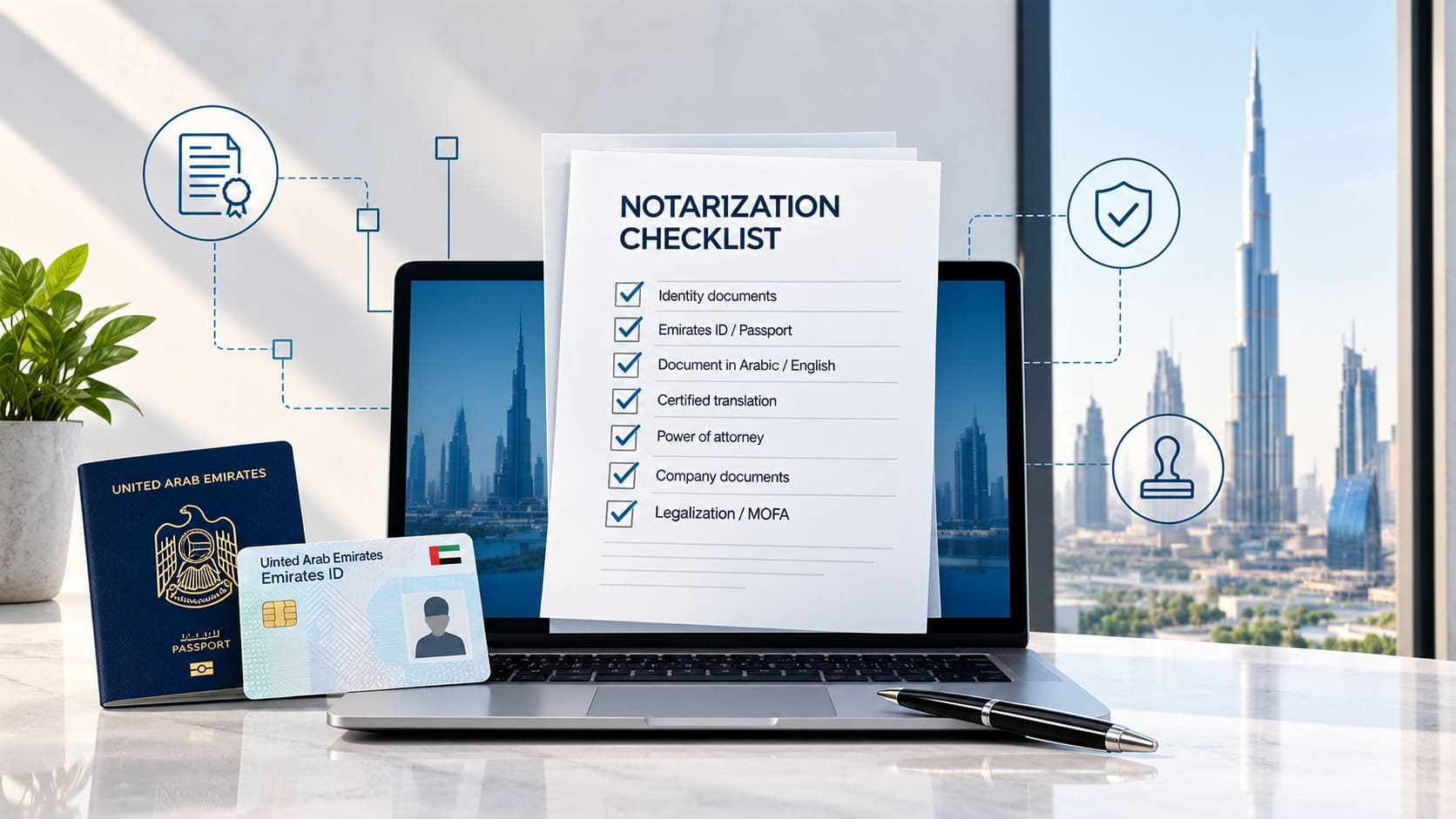
- Passport or Emirates ID (if you have become a resident).
- Tenancy Contract — if the apartment is rented. So that the buyer understands when the contract expires and whether it can be terminated early.
Step 4. Preparing the property
Buyers in the UAE prefer clean, well-maintained, and tidy apartments. Therefore, do not be lazy to remove all unnecessary items before viewing or posting photos. If necessary, do at least cosmetic repairs, especially in the kitchen, toilet, and bathroom. You can also order professional photography for posting photos and video tours.
Step 5. Selecting a broker for negotiations and closing the deal
As mentioned above in step three, the involvement of a broker in the transaction is mandatory. Therefore, you will need to find a reputable service provider. They will assist in facilitating the transaction by:
- assessing the property at its actual market value;
- advise you on the best time to put the apartment up for sale;
- place advertisements on portals;
- draw up a purchase and sale agreement;
- help you successfully register with the DLD and monitor the payment through the bank.
Only work with brokers who are officially registered and have a unique RERA ID number. This information can be verified on the Dubai REST website.
Marketing features — where and how to find buyers
The marketing stage involves choosing the right channels to attract the right customers and negotiating in a way that does not prolong the sales process. The involvement of a RERA-licensed broker will greatly facilitate the task.
Good to know: Apartments sell faster than houses or villas. Dubai is the market leader in the UAE — apartments are purchased four times more often here than in the capital.
Nuances of placing ads
The owner can search for buyers in the UAE independently, but only through unofficial channels: social networks or personal contacts. However, in practice, this is a long process. To sell an apartment in Dubai quickly, it is recommended to place ads on official portals:
- Property Finder is the largest portal focused on expats and investors.
- Bayut is actively used by residents, especially in the rental and resale segment.
- Houza is a website where advertisements for the sale of villas, town houses, and other premium properties are posted.
- JustProperty is a platform where premium properties and apartments in new buildings are advertised.
- Dubizzle is suitable for budget properties and quick resales. It is partially accessible to private individuals, but brokers have professional accounts.
The nuance is that only agencies with a RERA license have access to these platforms. They publish ads on all platforms at once and also work with a large customer base.
The subtleties of Eastern negotiations
In the UAE, it is customary to bargain. Therefore, if you offer a small discount, the buyer will definitely choose your property. But keep in mind that you should not lower the price too much — 5% is quite enough.
The price must be agreed upon and specified in a preliminary agreement (Memorandum of Understanding). After that, it is inappropriate to discuss discounts — the amount on the check and in the MoU must match, otherwise the Dubai Land Department will reject the deal.
If the buyer is local, it is better to entrust the negotiations entirely to a broker who is fluent in the language and familiar with local traditions.
Settlements and sales — how to avoid “surprises”

Agencies usually “forget” to warn the owner that the real estate sale procedure includes a mandatory check of the source of funds (AML) by the bank issuing the check. Without this, the transaction will not be registered. Therefore, regardless of who the buyer is — a resident, investor, or company — the money must be transferred to the seller’s personal bank account. The bank must be registered in the UAE. If there is no account, it must be opened before the transaction begins.
If the seller wants to receive money to an account in another country, they should know that this is impossible. A UAE bank is still required as the point of receipt of funds.
What is included in AML verification?
The bank issuing the check is required to verify:
- the source of the buyer’s funds,
- the accuracy of the amount,
- the absence of suspicious transactions.
Foreign investors are checked particularly thoroughly. The procedure can take from 2 to 10 business days.
The buyer pays by check
The seller receives a check (manager’s check) as payment — a guaranteed payment instrument issued by the buyer’s bank. Important to know:
- the check is made out to the seller;
- the amount must exactly match the price specified in the MoU;
- the check is first sent to the Trustee Office — a government agency — during the registration of the transaction for data verification;
- only after verification is the check returned to the buyer — in person or through a broker, if a power of attorney has been issued for it.
Nuances of registering a transaction
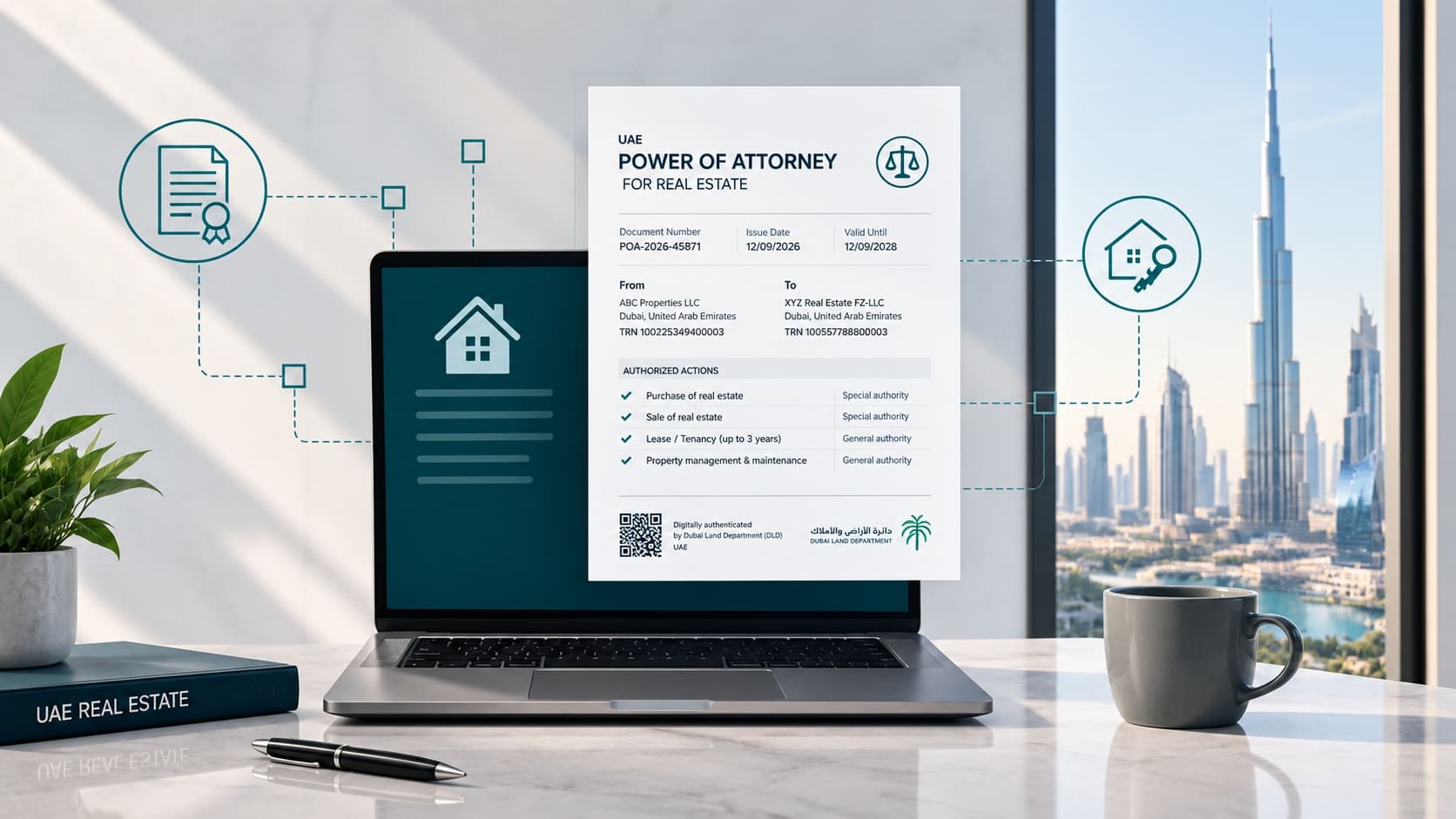
The transaction is carried out at the Trustee Office, a state registrar, where the transfer of ownership takes place. Both parties arrive there after agreeing on the terms and the buyer receiving a check from the bank. Instead of them, authorized representatives may also arrive, who must provide a power of attorney (you can draw up a POA here). The buyer must also pay a duty of 4% of the property value. It is paid by a separate check, indicating the Dubai Land Department as the recipient. Sometimes the fee is split in half by agreement.
In addition to the standard package of documents confirming ownership, the parties submit:
- passports or Emirates ID;
- purchase check;
- check for payment of duties.
Next, Trustee Office employees verify the data: matching names, amounts in the purchase agreement, and authenticity of checks. After that, they confirm that the transaction meets the requirements of the Trustee Office. The old title deed is canceled, and a new one is created in the buyer’s name.
If all documents are in order, the entire procedure takes from 30 minutes to 2 hours. The new owner immediately receives the title deed, and the seller receives their check.
Please note: It is not possible to sell an apartment for cash or request that the money be transferred to a relative’s bank account. The transaction will simply not be officially registered.
How to avoid having your funds frozen?
In theory, once the seller has received the check, they have every right to dispose of their funds. However, it is important to know that you will not be able to receive payment in cash. In order to combat terrorism, the bank may freeze funds if it considers the transaction to be suspicious.
What actions would be appropriate:
- check with the bank in advance about transfer limits;
- after completing the transaction, leave the funds in the account for other transactions or investments;
- transfer the funds to another bank abroad.
If you try to withdraw cash or make several purchase and sale transactions in a row, the bank will most likely block your account and request all information about the origin of the funds. You will need to not only bring a package of documents, but also answer a number of questions:
- why you sold the property;
- how you plan to use the funds;
- whether you have a license for commercial activities;
- whether you have paid all taxes.
It is better to prepare for these questions in advance. You should pay off all your debts, if you have any. This is because in the UAE, even a delay in utility payments can lead to a delay in unblocking your account.
Legal nuances: what investors need to know
If transactions are carried out regularly — many times a year — and are registered as private, this will definitely attract the attention of banks. And they may block the account for hidden commercial activity.
How long before you can sell a purchased apartment?
In theory, there are no restrictions, but you cannot, for example, sell a property that is still under construction. Before selling the property, you must obtain a NOC — a certificate from the developer. Also, if you plan to sell real estate on a regular basis, it is better to conduct transactions through a company.
How to conduct transactions through a company?
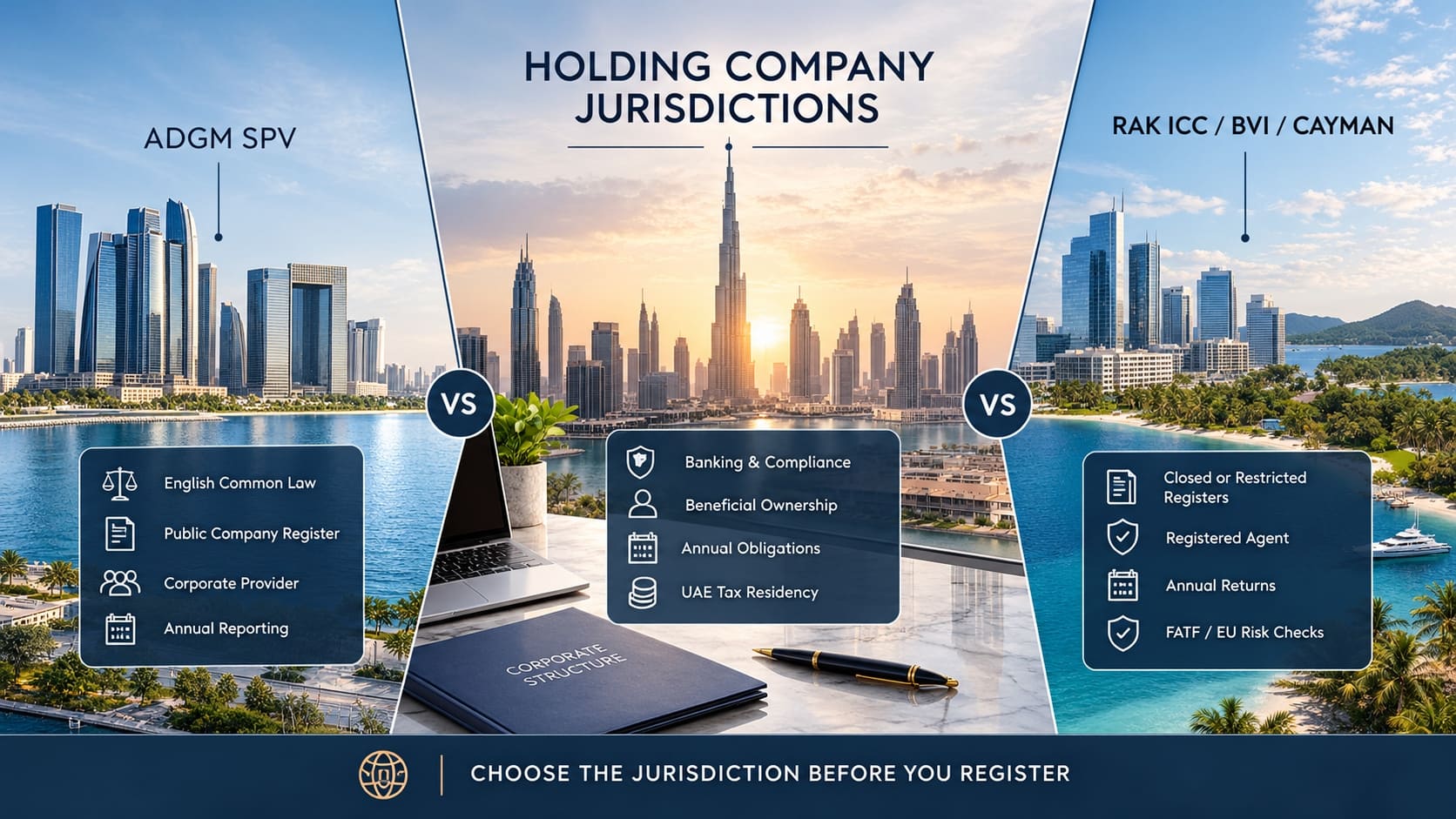
Regular resale of real estate is no longer a one-time investment, but a full-fledged business model. Those looking for an answer to the question of how to start making money on real estate need to decide in advance whether to register the property under an individual, a company, or an offshore entity.
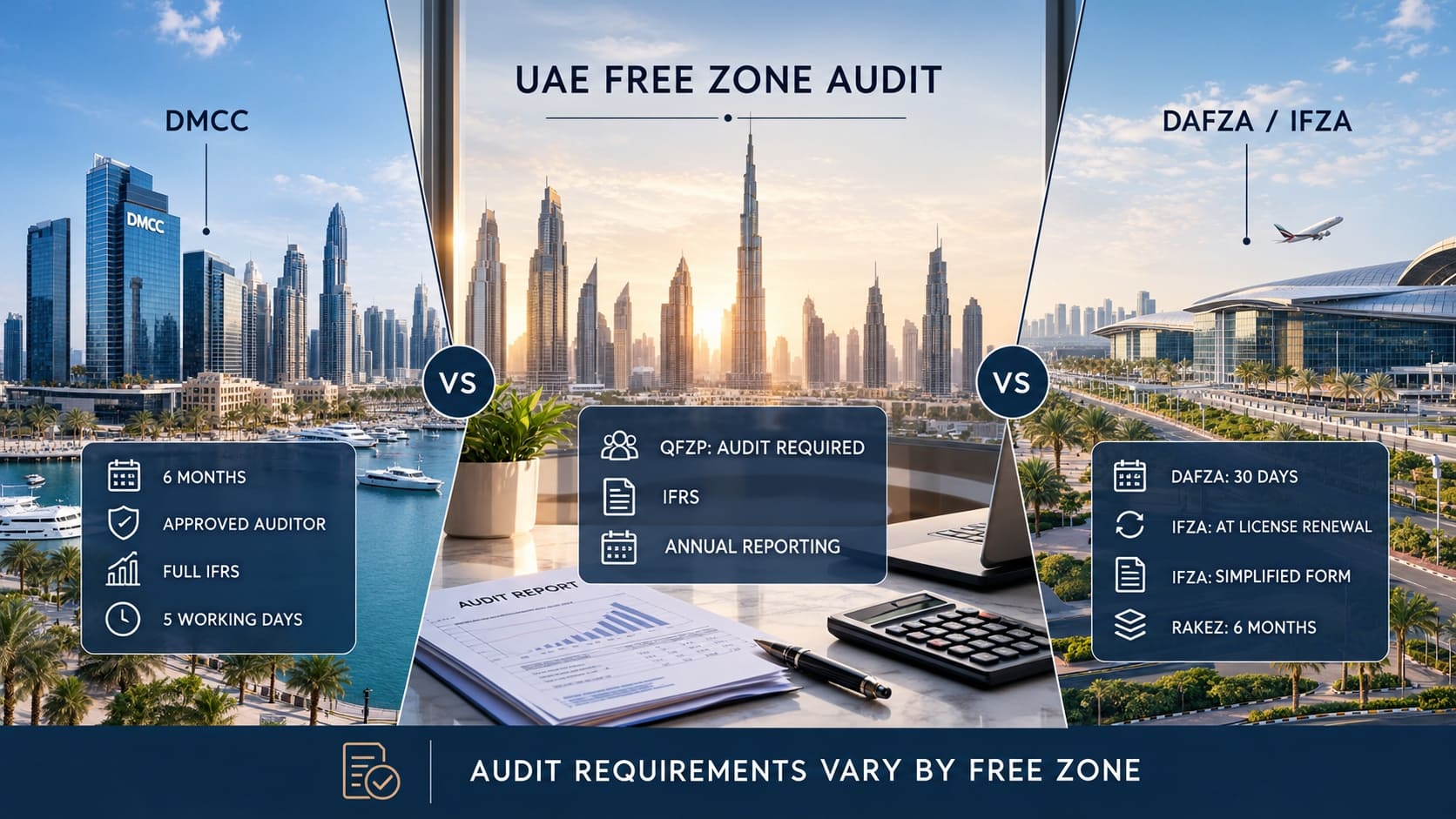
Investors usually register a legal entity in Mainland or Free Zone and obtain the appropriate license. When selling, the money goes to a corporate account, not a personal one. As a result, banks have no questions — commercial activities are officially registered, and the company pays taxes. In the UAE, they are minimal — 5% VAT, 9% corporate tax, 4% duty for each property — often paid by the buyer.
Offshore scheme — benefits and risks
Some foreigners register a company offshore, purchase real estate in the name of the company, and then sell the company itself. Essentially, this allows them to avoid additional questions from the bank, taxes, and the 4% duty, as well as the agent’s commission. After all, the Dubai Land Department is not involved in the transaction, and the names of the new owners are simply rewritten in the statutory documents.
However, there are some risks associated with this scheme:
- The bank may block the funds if it considers the structure to be non-transparent.
- The buyer does not receive a Title Deed in their name. They can only indirectly own the property through the company.
- An offshore company requires a real legal structure in its home country.
If the seller owns a business, then with the competent approach of experienced lawyers, the scheme is feasible.
Conclusion
In this article, we have examined the nuances that may assist prospective investors: the step-by-step process of selling an apartment, risks, and legal nuances. A successful transaction requires not only an understanding of the market situation, but also accurate work with documents, banking requirements, and the form of ownership. Without legal training and control over the details, even a simple sale can result in delays, blockages, or financial losses.
That is why we offer our services for opening a bank account. With our help, you will be able to:
- choose a bank that provides services in line with your objectives;
- prepare a package of documents taking into account all requirements;
- pass a compliance check (KYC/AML) without unnecessary delays;
- open an account for an individual or legal entity, depending on your business model;
- avoid common mistakes that lead to accounts not being opened or being blocked.
We also help you open a turnkey company in the UAE with a structure that fits your business model. If needed, we’ll figure out the risks of doing business offshore.
We provide legal protection for the seller’s interests — from the first contact to the final payment.
Contact us if you require accurate, controlled, and secure support for agreements — without risks, delays, or bank blocks.