

A partner is ready to come on board, an investor has agreed on a number, hands have been shaken. What follows is the part both sides are rarely prepared for: adding a shareholder UAE company law treats as a registration procedure with its own deadlines, quorum and notice requirements, not a signature on a contract. The deal takes effect not when the money moves, but when the change is entered in the register.
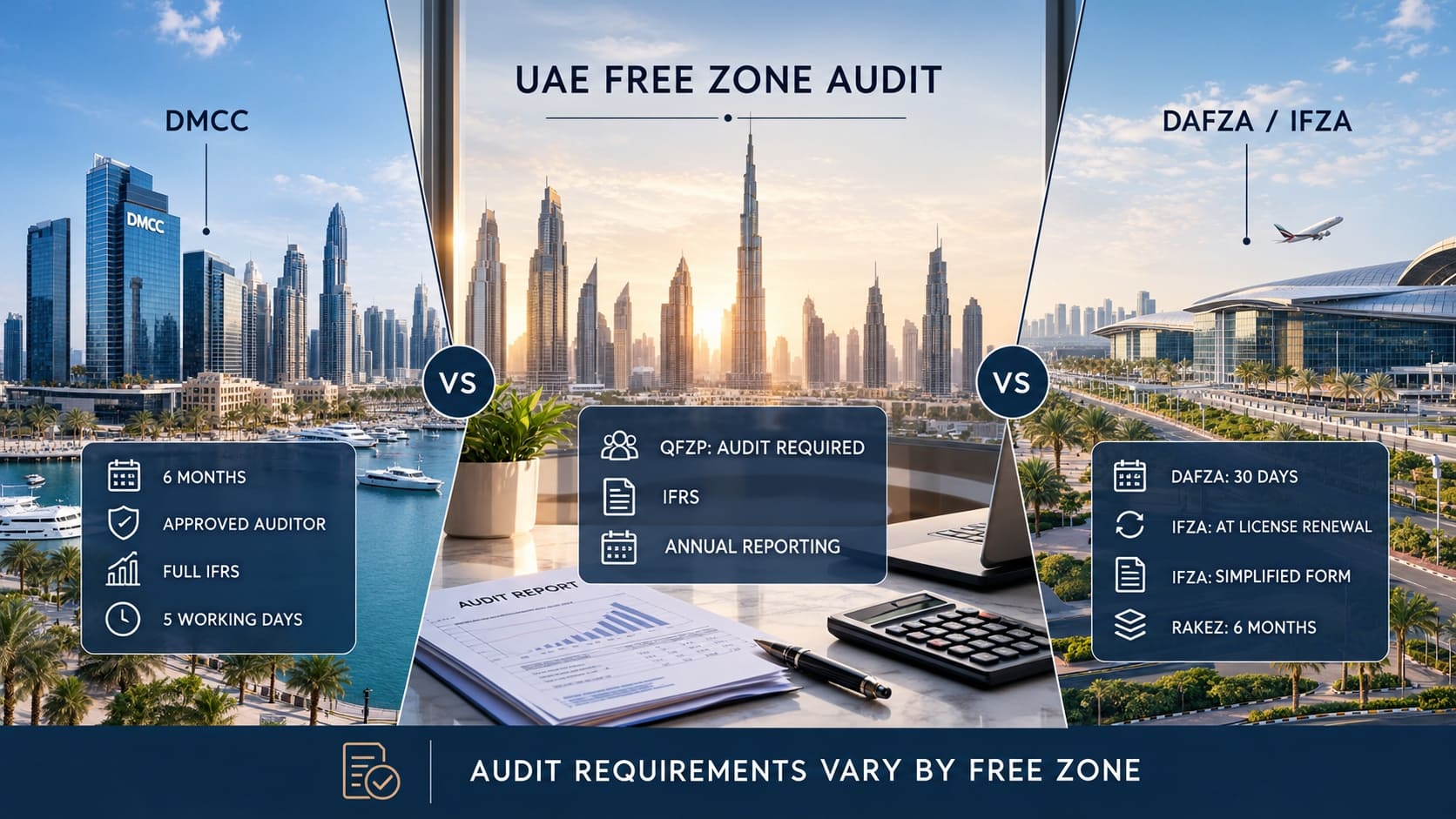
Jurisdiction decides almost everything. Onshore, the other partners are protected by a pre-emption right with a hard deadline; in a free zone the process runs through a portal and takes weeks; in ADGM and DIFC, registering the transfer and notifying the registrar are two separate steps with two separate clocks.
Two ways to bring in a new partner
There are exactly two routes, and they produce different outcomes.
- The first is a share transfer: an existing owner sells part or all of a stake to the new person. Capital stays the same, only its distribution changes, and the money goes to the seller.
- The second is a capital increase through a new share issue: the company issues additional shares, the new participant pays for them, the money lands in the company, and existing owners’ stakes are diluted proportionally.
The distinction matters for an investor. If they are putting money “into the business”, they need an issue, otherwise the cash goes to the seller, not the company. If they are buying out a departing partner, that is a transfer. The two should not be blended into one document: they rest on different resolutions, different corporate approvals, and a different tax picture for the seller.
Mainland: the 30 days you cannot skip

Onshore, Federal Decree-Law No. 32 of 2021 on commercial companies governs LLCs, and it contains a mechanism that regularly catches people off guard.
Article 80 gives the other partners a right of pre-emption. A partner selling a stake to an outsider must notify the others through the company’s manager, naming the buyer and the price. The manager passes this on to the partners, and each of them has 30 days from the date the manager was notified of the agreed price to buy the stake on the same terms.
If the price is disputed, it is set by experts nominated by the Competent Authority, at the applicant’s expense. If several partners exercise the right, the stake is split pro rata to their capital contributions. Only once the 30 days have passed without a buyout is the seller free to sell to the chosen buyer.
The upshot: the timeline for a deal with an outside investor starts not at signing but at the notice to partners, and a month needs adding to the calendar. Market practice has found a faster route, a written waiver of pre-emption signed by all partners, but Article 80 itself provides for no such waiver, so its acceptability should be confirmed with the registrar in advance.
Mainland: quorum, the register and the notary
The second knot is corporate approvals. Under Article 101, amending the memorandum and increasing capital require the consent of partners holding at least three quarters of the shares represented at the meeting; a resolution that increases partners’ financial obligations requires unanimity.
Then comes registration. Article 79 is explicit: an assignment of a stake is valid against the company and third parties only from the date it is entered in the commercial register, not from the date of the contract and not from the date of payment. Article 15 adds that amendments to the memorandum take effect only after registration, and the Competent Authority must be notified within 15 business days.
There is a common misconception about the notary. Article 14 states that the memorandum and its amendments are drawn up in Arabic and attested by the Competent Authority, in person or by electronic signature, with notarisation applying only as an exception, in cases the authority itself determines. A notary is not a blanket legal requirement; it is a requirement a given emirate attaches to a given situation. In Abu Dhabi, the service page for amending partners’ shares on an industrial licence expressly requires an appendix to the memorandum attested by a Notary Public.
Two more figures worth noting: an LLC runs from two to fifty partners, and 100% foreign ownership became the general rule after Federal Decree-Law No. 26 of 2020. Exceptions remain: Cabinet Resolution No. 55 of 2021 lists activities of strategic impact — defence and security, banks and exchange houses, financial and insurance companies, currency printing, telecoms, Hajj and Umrah services, Quran memorisation centres — where the relevant regulator sets the percentage of UAE-national participation. Fisheries-related services sit apart: there, the resolution itself fixes national participation at 100%.
Dubai and Abu Dhabi: what the counter process looks like
In Dubai the service is called “Request to amend a trade licence” and covers a change in the partner structure. The Department of Economy and Tourism asks, among other things, for a board or general assembly resolution approving the partnership and an appendix to the memorandum. The department publishes no fixed processing time and no fixed fee.
In Abu Dhabi, the service is filed through TAMM as “Amend Economic Licence”, where a change of partners sits alongside changes to activities and legal form. Required documents include the sale and assignment agreement, an appendix to the partnership agreement, and approval from the relevant authority. The stated timeframe for a commercial licence is 15 working days.
Read these windows correctly: they cover processing the application, not the whole deal. The month for pre-emption, legalising the investor’s documents and agreeing the new memorandum all happen before filing.
Free zone: the process runs through the zone’s portal

In free zones the logic is different: there is no notary, only the zone’s registrar and its portal. DMCC is the best-documented example and worth walking through.
DMCC calls the operation a share transfer and splits it into an internal one, between existing participants, and an external one, where a new person comes in. The stated processing time is 2–3 weeks either way. The application is filed through the Member Portal, under the share capital amendments section, followed by a DMCC review, e-signature, submission of originals where needed, and, at the end, an electronic share certificate and electronic memorandum.
The document set for a new individual shareholder is wider than most people expect: alongside the transfer form and memorandum, the zone asks for a current certificate of incumbency, a passport copy, the residence visa page, a specimen signature, a completed KYC form, proof of address, and an NOC from the current sponsor. That last item derails timelines more than anything else: if the incoming partner is in the UAE on a visa sponsored by another company, that letter needs to be requested early. For a corporate shareholder, add a certificate of incorporation, its memorandum, a resolution approving the share acquisition, and the passport of the parent entity’s director.
There are also prerequisites to check. E-signature must be activated for every authorised signatory, companies registered before 2020 must have adopted a memorandum under the 2020 rules, the licence must be active, and there must be no sanctions flagged on the portal. Branches cannot apply for a share transfer at all. There are also clocks running: a draft is voided after 60 calendar days, and an application returned for amendment lapses after 90.
RAKEZ’s 2023 regulations are stricter on one point: a transfer is not entered in the register until the signed transfer instrument is submitted to the Registrar for approval, and it takes effect from the date of entry; certificates are ready within 14 days. IFZA has no published procedure describing the process; its official application form provides for a “renewal with amendments” type, meaning the zone handles such changes together with a licence renewal. The exact route and timing there are worth confirming in writing before the deal.
Tell us the ownership structure and the terms on which the new partner is coming in, and we will map the deal’s timeline from notice to registration and flag the bottleneck.
ADGM and DIFC: registration and notification are two different steps
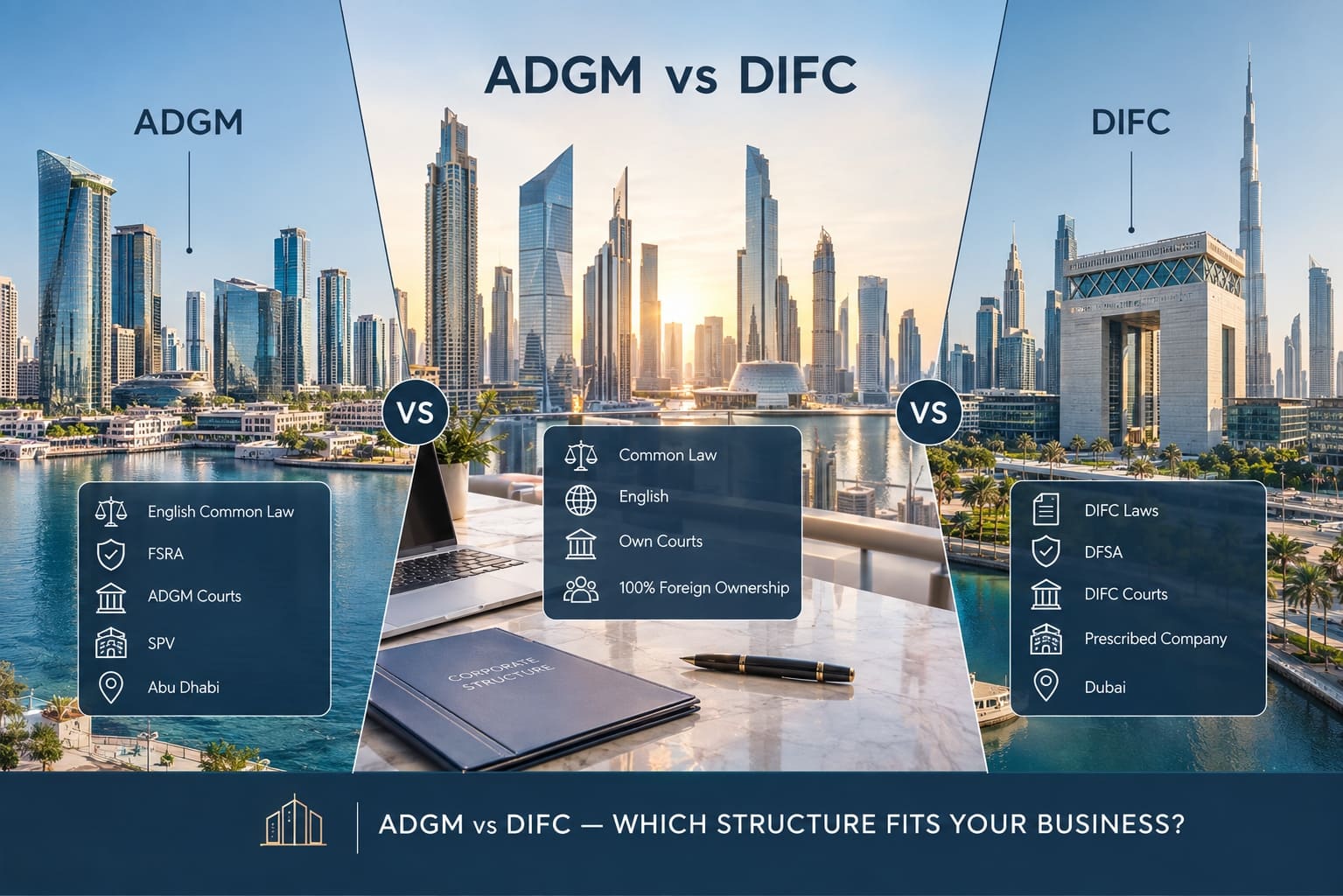
The financial centres run their own company law, and here it matters not to confuse two steps: entering the new participant in the company’s own register, and notifying the centre’s registrar.
In ADGM, under the Companies Regulations 2020, a transfer is registered only once a proper instrument of transfer is in place. The company must register it or issue a reasoned refusal within two months of filing; certificates are produced within the same period. There is no separate notice of transfer to the Registrar; it is disclosed in the annual confirmation statement instead. A new share issue works differently: a return of allotment must be filed with the Registrar within one month of the allotment date.
In DIFC, under the Companies Law No. 5 of 2018, the company registers the transfer where a written instrument exists and separately files a notice of transfer with the Registrar, within 30 days, with the same 30 days applying to a notice of allotment. Certificates are issued within 14 days.
Table 1 — How a new shareholder is admitted in the three types of jurisdiction
| Parameter | Mainland | Free zone | ADGM and DIFC |
|---|---|---|---|
| Pre-emption right | Yes, 30 days by law | Per the company’s articles | Per the company’s articles |
| Quorum to amend the memorandum | At least 3/4 of shares represented | Per the articles and zone rules | Per the articles |
| Where it takes effect | Entry in the commercial register | The zone’s companies register | The company’s register of members |
| Attestation | Competent Authority, notary as an exception | E-signature on the portal | Instrument of transfer |
| Typical timeframe | 15 business days to notify | 2–3 weeks at DMCC | Up to 2 months at ADGM |
| Notice to the registrar | Yes | Yes, through the portal | DIFC yes, ADGM only for an issue |
Beneficial owners: the notice without which the deal will not register
The most underrated item, and it is federal. Article 8 of Cabinet Decision No. 109 of 2023 blocks the deal outright: the legal person may not register or give effect to any document relating to a change in ownership until the transferee has submitted a statement on whether the transfer changes the beneficial owner, what the nature of the change is, and who the new beneficial owner is. This is not an after-the-fact formality; it is a condition of registration.
From there, two fifteen-day clocks run that are easy to conflate. The company’s internal register of beneficial owners is updated within 15 days of becoming aware of the change, while the update filed with the registrar is due within 15 days of the change itself. The starting points differ, and the second deadline lands earlier.
Table 2 — Notification deadlines after the deal
| What is notified | Deadline | Basis |
|---|---|---|
| Competent Authority (mainland) | 15 business days | Commercial Companies Law, Art. 15 |
| Registrar, change of ownership data | 15 days from the change | Cabinet Decision 109 of 2023 |
| Internal beneficial owner register | 15 days from becoming aware | Art. 8 of the same decision |
| Federal Tax Authority | 20 business days | Tax Procedures Law |
| DIFC Registrar, notice of transfer | 30 days | DIFC Companies Regulations |
Table 3 — Fines for not updating the registers
| Violation | Second violation | Third violation |
|---|---|---|
| Register of partners not updated within 15 days | AED 15,000 | AED 30,000 |
| Register of beneficial owners not updated | AED 15,000 | AED 30,000 |
| Register of partners never established | AED 50,000 | AED 100,000 |
For most categories the first violation is closed with a warning, but not for all: for failing to keep a register of partners at all, the fine starts immediately. On a third violation the registrar may suspend the licence and close the business until the fine is paid. The regime applies to companies registered in the country, including non-financial free zones.
Tax, bank and visas: what follows the deal

- Tax is the piece people forget most often. Article 6 of the Tax Procedures Law requires a registered person to notify the Federal Tax Authority of any circumstance requiring a change to the tax register within 20 business days. A change in the ownership structure is exactly such a circumstance.
- The bank finds out about the change from you, not from the registrar. Compliance will ask for the updated memorandum, the new ownership structure, the beneficial owner’s documents, and will refresh the KYC file. Until that is done, payments can stall.
- The third layer is visas. If the incoming partner plans a residence visa through the company, their investor status needs to be reflected in the paperwork before filing; if they are already in the UAE on a visa tied to another entity, an NOC is needed. The reverse also applies: a departing partner whose visa is tied to a stake loses the basis for it.
How we run a deal like this
We start with the jurisdiction and the ownership structure: how many partners there are now, what the memorandum says about pre-emption, and whether the incoming partner is buying in or subscribing to a new issue. From that we build a timeline working back from the closing date. Next come the corporate resolutions, the document set for the new partner with legalisation factored in, the beneficial owner statement and the filing with the registrar, and, once the register is updated, the loose ends: tax, bank, visas.
Tell us who is coming into the company and in which jurisdiction it is registered, and we will name a real timeline for the deal and the list of documents to start preparing now.
Get a consultation
This material is for information purposes and reflects the regulatory position as of September 2026. Legislation and free zone rules change; before a deal, check the current text of the relevant instruments with the registrar of your jurisdiction.