The protocol runs, the token trades, holders vote in Discord — and there is nobody to sign a contract with a supplier. No legal entity, no account to open, and the rights to the code and the trademark sit, formally, on a founder’s wallet. While the project is small, this is tolerable. At a funding round, at a tier-one listing, or on receipt of the first letter from a law firm, it turns out that a distributed community without a legal wrapper is not a protected structure. It is unlimited personal liability for a handful of people.
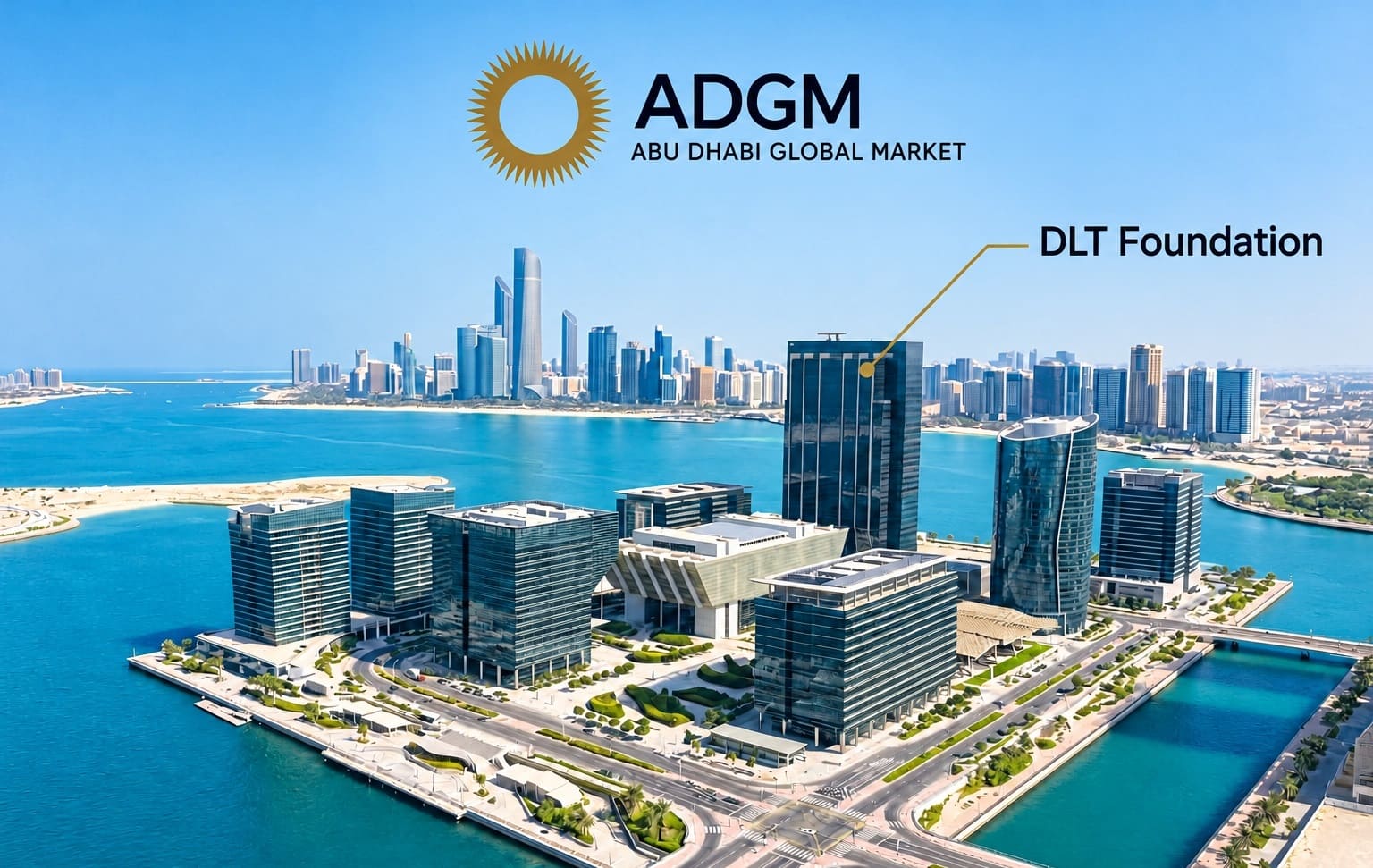
Registering a DLT Foundation in ADGM closes that gap. In 2023 Abu Dhabi Global Market enacted the DLT Foundations Regulations: a dedicated regime designed not for family wealth but for blockchain projects, DAOs and token issuers. This is not an old foundation dressed up for a new market — it is a distinct type of legal person whose constitutional documents can carry on-chain voting and token holder rights.
What follows: what the form gives you, how it compares with Cayman and Panama, where the line to regulated activity runs, and what registration looks like in practice.
Why a Web3 project needs a legal wrapper

- The first reason is limited liability. In many jurisdictions an unincorporated DAO is treated as a general partnership, which means joint and several liability of participants for the obligations of the whole group. A legal entity severs that link: obligations sit with the foundation, not with the active members of the community.
- The second is legal capacity. A foundation hires developers, contracts with smart contract auditors and market makers, owns domains, repositories and trademarks, opens a bank account and receives funds from investors. Without a legal entity each of those steps is either impossible or runs through a founder’s personal wallet, with every tax consequence landing on that individual.
- The third is credibility with counterparties. Exchanges at listing, banks at account opening, auditors and institutional investors all ask for the ownership structure, beneficial owners and corporate documents. A project that has none of this fails compliance — not because anyone distrusts the technology, but because there is nothing to put in the form.
- The fourth is treasury. Protocol funds have to be held somewhere, managed by someone and spent according to community decisions. A foundation gives that a frame in which the council’s powers and token holders’ rights are set out in a document rather than in a blog post.
What a DLT Foundation is and how it differs from an ordinary foundation
The foundation as a form has existed for a long time: a legal person with no shareholders, created by a founder for a defined purpose. It has no owners in the usual sense — it has a constitutional document, a council that administers the assets, and the purpose all of it serves. ADGM has offered classic foundations since 2017, mostly used for family capital and succession planning.
The DLT Foundations Regulations 2023 added a separate regime for distributed projects. The key difference is that the regulator expressly contemplates things that a classic foundation would have to be stretched to accommodate: issuing tokens, governance through holder voting, linking internal procedures to smart contracts, and distributed decision-making instead of a centralised council acting for a narrow group of beneficiaries.
In practice that means the charter and by-laws can describe on-chain mechanics as part of corporate governance. Token holder voting stops being informal practice and becomes a procedure you can point to in court. For a DAO this is decisive: it is precisely the gap between how a project is actually run and what its documents say that tends to collapse the structure at the first conflict.
The second feature is the absence of mandatory beneficiaries. A foundation can exist for a purpose — developing a protocol, supporting an ecosystem, funding grants. Nobody has to own it, which is exactly what a decentralised project wants when it does not want its token to look like a share in somebody’s business.
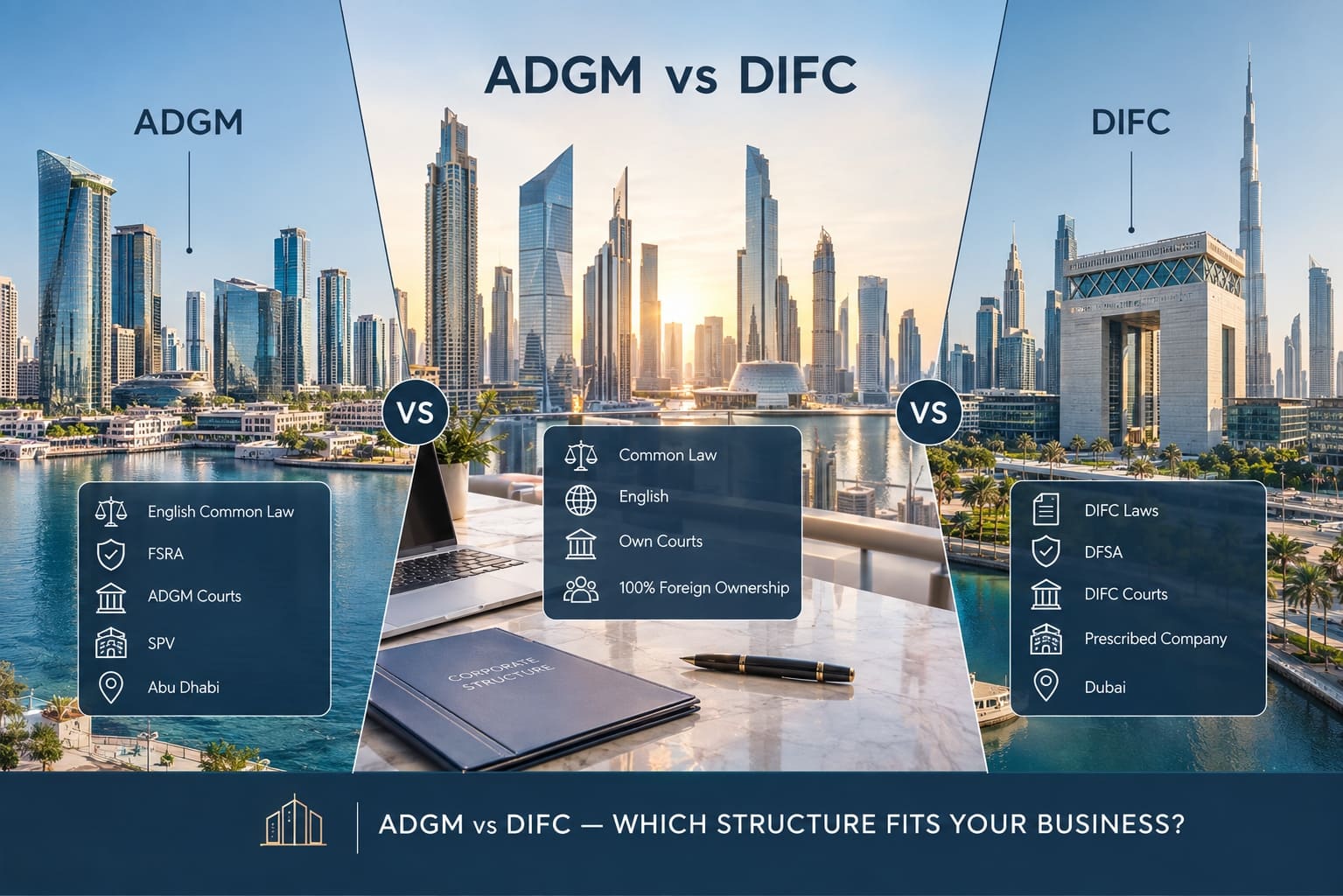
ADGM versus Cayman and Panama: where to register
The Cayman Islands and their Foundation Company were the default for DAOs for years. The Panamanian private interest foundation is a cheaper alternative with a long history. ADGM entered the competition later, with two arguments: regulation written specifically for distributed projects, and the reputational profile of the UAE, which banks and exchanges now treat noticeably better than classic offshore centres.
The difference shows up not in the basic construction — a foundation is a foundation everywhere — but in the detail: whether the law recognises on-chain governance, whether there is a financial regulator next door with a workable virtual asset regime, and how the project will look to a bank’s compliance officer.
Table 1 — Comparing jurisdictions for a Web3 project foundation
| Parameter | ADGM (UAE) | Cayman | Panama |
|---|---|---|---|
| Dedicated DLT regime | Yes, specific regulations | No, general regime | No |
| Legal system | English common law | English common law | Civil law |
| Virtual asset regulator | FSRA, defined regime | CIMA | Limited |
| How banks view it | High | Moderate, questions rising | Low |
| Corporate tax | 9%, relief possible | None | Territorial basis |
| Physical presence | ADGM address required | Registered agent | Registered agent |
One more factor is access to banking inside the UAE itself. A structure registered in ADGM, with a local address and a regulator the bank recognises, clears compliance appreciably more easily than an offshore company that first has to explain why it approached a UAE bank at all. This is no guarantee of an account — crypto projects remain a difficult category for every bank — but the starting position is fundamentally different.
What you can do without an FSRA licence, and what you cannot
The most expensive misconception in Web3 is that registering a foundation is permission to do anything crypto-related in the UAE. It is not. A DLT Foundation is a corporate wrapper issued by the ADGM Registration Authority. Financial activity is licensed by a different body — the FSRA — which runs its own regime for virtual assets.
The line is drawn by the substance of the activity, not its label. Issuing your own utility token as part of building a protocol is one thing. Running a venue where that token and others are exchanged, holding client funds, managing their assets or issuing a fiat-referenced token is quite another. The second requires FSRA permission, and operating without it counts as unlicensed financial activity in the UAE.
Table 2 — Where the licensing line runs
| Activity | Without an FSRA licence | Permission required |
|---|---|---|
| Owning protocol IP, code, domains | Yes | — |
| Hiring developers, ecosystem grants | Yes | — |
| Managing the foundation’s treasury | Yes | — |
| Issuing the project’s utility token | Usually yes | If it has instrument features |
| Exchange, trading venue, custody | No | Yes |
| Fiat-referenced token | No | Yes |
| Managing third party assets | No | Yes |
Classifying a specific token is a question to settle before registration, not after. The FSRA looks at economic substance: does the token carry a right to income, a share of profits, a claim against the issuer, does it promise appreciation driven by a team’s efforts. If it does, it is a financial instrument with everything that follows, whatever the project documentation calls it. The sensible order is to obtain a legal opinion on the token first, then build the structure around the answer.
How the structure works: council, charter, registered agent

The foundation is run by its council. These are not shareholders or owners — they are persons bound to act in the interests of the purpose recorded in the charter. The regulations set requirements for the minimum composition of the council, and in practice projects build it from founders, an independent member and sometimes a community representative.
There are two constitutional documents. The charter is the public part: name, purpose, governance structure. The by-laws are the private part: how decisions are taken, which matters go to a token holder vote, how a council member is appointed and removed, what happens to the treasury on winding up. The on-chain mechanics live in the by-laws, and their quality determines whether the structure survives a conflict inside the team.
There is also the guardian, an independent figure who checks that the council stays within the purpose. The role will be familiar from family structures; for a DLT Foundation, whether a guardian is appointed and what powers they hold is determined by the design of the particular foundation and set out in its constitutional documents.
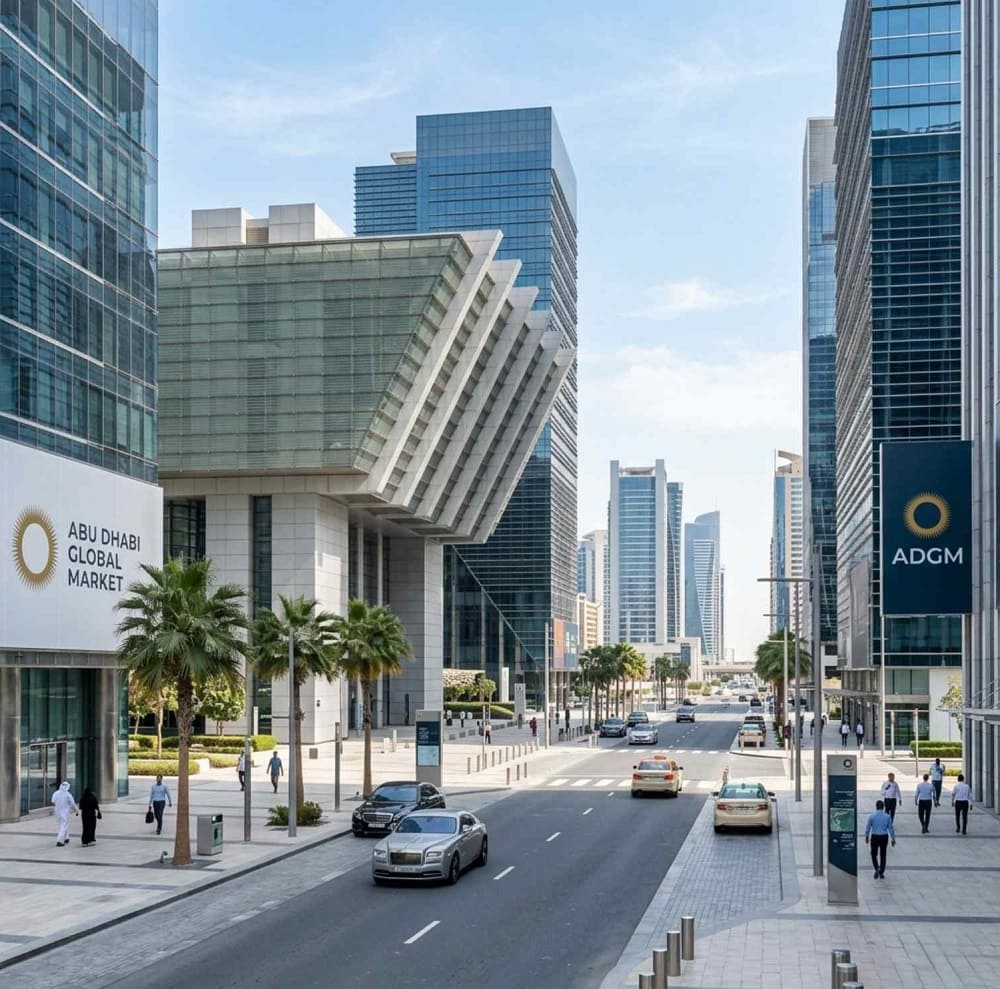
The foundation needs a registered office in ADGM. Since most Web3 projects have no physical office in Abu Dhabi and do not plan one, the address is supplied by a licensed company service provider (CSP). The same provider maintains the statutory registers and files with the Registration Authority through the online portal. The choice matters more than it looks: every later change to the structure goes through them.
Not sure which form fits the project? We work through the design before registration: how the token classifies, whether an FSRA licence is needed, what belongs in the charter and what in the by-laws, and what it will cost to maintain. Send us your scheme and we will look at it.
Registering a DLT Foundation, step by step
Step 1. Legal classification of the project. Before any filing you need to know whether the token falls within FSRA regulation and what activity is planned over the next year or two. Everything else follows from that answer: the documents, the group structure, the budget. Registering a foundation for activity that will need a licence in six months means starting over.
Step 2. Name approval and drafting the constitutional documents. The name is cleared with the Registration Authority. In parallel, the charter and by-laws are drafted: the purpose, the composition and powers of the council, the voting mechanics, how the treasury may be used. This is not template work — a charter pulled off the internet usually contradicts how the project actually operates.
Step 3. Forming the council and KYC. Every council member and controlling person goes through due diligence: passports, proof of address, CVs, source of funds. For crypto projects the review runs deeper than usual, and both the regulator and the provider look at involvement in other projects.
Step 4. Filing with the Registration Authority. The pack is submitted through the ADGM online portal together with the government fees. The Registration Authority may come back with questions about the business model. That is a normal part of the process, not a warning sign.
Step 5. Registration and issue of documents. Once approved, the foundation receives its certificate of registration and exists as a legal person. From that moment the annual obligations start running.
Step 6. Tax registration and banking. Registration with the Federal Tax Authority through the EmaraTax portal is required whether or not the foundation will pay tax. Opening an account is a separate project on its own timeline, and it is almost always longer than the registration itself.
Timelines depend first on how ready the documents are and how clear the business model is to the reviewer. Two things stretch the process: an unresolved token classification, and legalisation of council members’ foreign documents.
What documents you will need
The pack is assembled along two lines — the foundation itself, and the people who run it.
- Draft charter and by-laws
- Description of the foundation’s purpose and governance model
- Passports and proof of address for every council member
- CVs of council members and their role in the project
- Description of the source of funds financing the foundation
- Token documentation: whitepaper, tokenomics, legal opinion
- Confirmation of the registered office in ADGM
Prepare separately a clear description of the project in compliance language rather than marketing language. A whitepaper written for a community reads badly to a reviewer, who needs answers to different questions: who takes decisions, where the money comes from, who receives it and for what. Two or three pages answering those directly will save weeks of correspondence — with the registrar first, and with the bank later.
Tax and reporting after registration
Corporate tax in the UAE was introduced by Federal Decree-Law No. 47 of 2022: a headline rate of 9% on profits above AED 375,000. A free zone company meeting the Qualifying Free Zone Person conditions can apply a 0% rate to qualifying income, but the list of qualifying activities is finite, and activity involving the issue and distribution of tokens to the public does not generally sit within it. Do not count on an automatic zero — the foundation’s position needs to be modelled in advance, with a tax adviser.
Registration with the Federal Tax Authority through EmaraTax is mandatory; the return is filed and the tax paid within nine months of the end of the tax period. If the foundation carries out activity within scope of VAT, add registration once taxable supplies cross the AED 375,000 threshold, plus regular returns.
Beyond tax, the annual cycle covers renewal of the registration, filing financial statements with the Registration Authority, maintaining the statutory registers and the register of controlling persons, and the annual data protection notification. Delays here cascade: an unrenewed registration blocks further filings, and unfiled accounts become a problem the first time a bank asks.
Accounting for crypto assets deserves its own mention. A treasury held in tokens has to appear in the financial statements, which means deciding on recognition, measurement method and rates. That is work for an accountant who has handled crypto projects before, not for generic outsourced bookkeeping.
Moving an existing foundation to ADGM
A project that already has a foundation in Cayman, Panama or the BVI does not have to build a second structure and transfer assets into it. ADGM allows a foreign legal person to continue into its jurisdiction: the foundation keeps its legal personality, its history and its existing contracts, but from registration it is governed by ADGM law.
The practical value is that relationships with counterparties are not broken. Contracts, intellectual property rights and bank accounts stay with the same person — the jurisdiction changes, not the party to the deal. For a project with a live protocol and running agreements, that is materially cheaper than migrating through a newly incorporated entity.
The procedure requires confirmations from the jurisdiction of origin: that the transfer out is permitted, that the entity is in good standing and not in liquidation. Obtaining those documents usually takes longer than filing the application in ADGM.
Mistakes Web3 projects keep making
The first and most expensive is registering the wrapper before the token classification is settled. The structure is built around the legal conclusion, not the other way round. A project that registers first and then discovers its token is a financial instrument rebuilds everything.
The second is a charter that does not match reality. The documents show a centralised council of three; Discord shows holder voting; the two are unconnected. While things are calm, nobody minds the gap. In a conflict it means the community’s decisions have no legal weight.
The third is underestimating the banking stage. Registering a foundation takes weeks; opening an account for a crypto project takes months, and the outcome is not guaranteed. Planning a raise or a launch around the registration date is risky, because the real constraint is almost always the bank.
The fourth is economising on the company service provider. The foundation physically exists through the provider’s address and filings. If they do not understand crypto specifics and do not answer emails, the trouble starts not at registration but a year later, at the first renewal and the first bank request.
What our packages include
We start with the design rather than the filing: what the token is, who takes decisions, where funds come from and where they go. Registration without that review is the most common reason a structure has to be rebuilt.
Table 3 — DLT Foundation support packages
| Parameter | Basic | Standard | Premium |
|---|---|---|---|
| Model and token review | Rapid assessment | Full opinion | With tax modelling |
| Charter and by-laws | Template adaptation | Bespoke drafting | Bespoke drafting |
| Filing with the Registration Authority | Yes | Yes | Yes |
| Registered office | Yes | Yes | Yes |
| Tax registration and filings | No | Registration and returns | Full support |
| Banking support | No | Application pack | Leading the discussions |
| Fee | Case by case | Case by case | Case by case |
We deliberately do not publish a single price list. The fee is worked out case by case: complexity of the tokenomics, the number of council members and their residency, whether an FSRA licence is needed, whether an existing foundation is being moved or a new one created, whether a UAE bank account is required. A foundation for ecosystem grants with a two-member council and a structure behind a protocol with a billion-dollar market cap are different amounts of work, and an averaged figure would tell you nothing useful.
A legal opinion on the token and FSRA licensing support are scoped as separate projects, also priced case by case and quoted after the initial review of the model.
What to do next
The order of operations for a Web3 project is almost always the same: first the legal classification of the token and the model, then the choice of form, and only then registration. The reverse order costs more — not at the filing stage, but a year later, when the structure has to be rebuilt around the activity that actually happens.
Dynasty Business Adviser reviews the project’s model, drafts the charter and by-laws around how it is genuinely governed, registers the DLT Foundation in ADGM and takes on the ongoing corporate work, including the tax perimeter and preparation for the bank. Write to us: on the first call we will look at your scheme and tell you what in it will have to change.