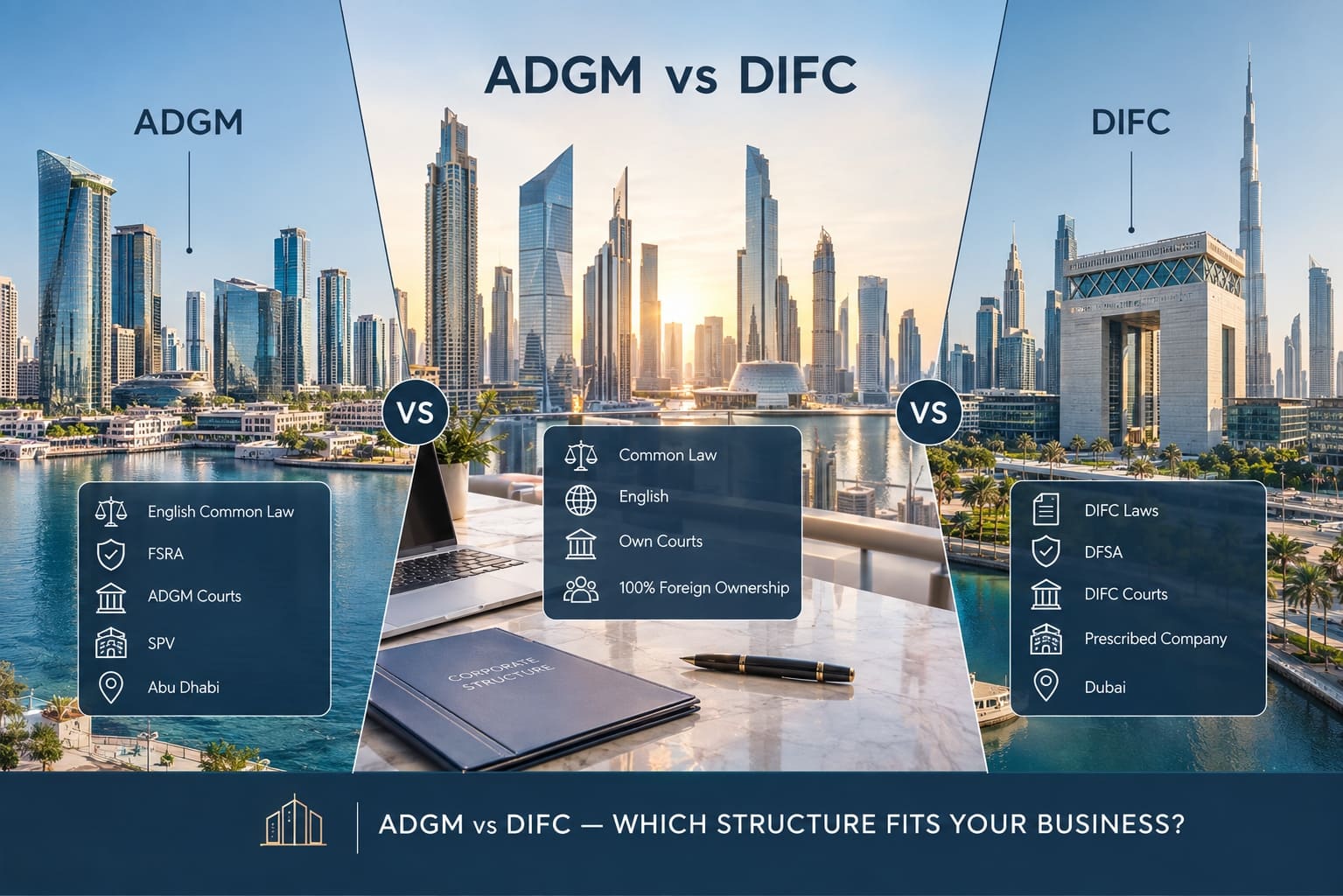

A client came to us with the decision already taken: ADGM SPV registration, then transfer into it the shares of three operating companies and an Abu Dhabi apartment. The plan looked sound and the paperwork was ready. The first review killed it. The companies sat in Europe, the property was held personally in a second country, and the client was tax resident in a third. The future vehicle had no connection to the UAE under any recognised heading, and without one the ADGM Registration Authority does not accept the application.
Registering an SPV in the UAE is not a form-filling exercise. It is the assembly of a structure that has to survive the registrar’s review and then be serviced for years without unpleasant surprises. We take the task apart before anything is filed: what exactly you hold, where it sits, who owns it, why a holding layer is needed at all, and whether that layer will stand up to ADGM, the tax authority and your bank.
Below is how the SPV regime in ADGM is built, what our work consists of, and the traps that catch people most often.

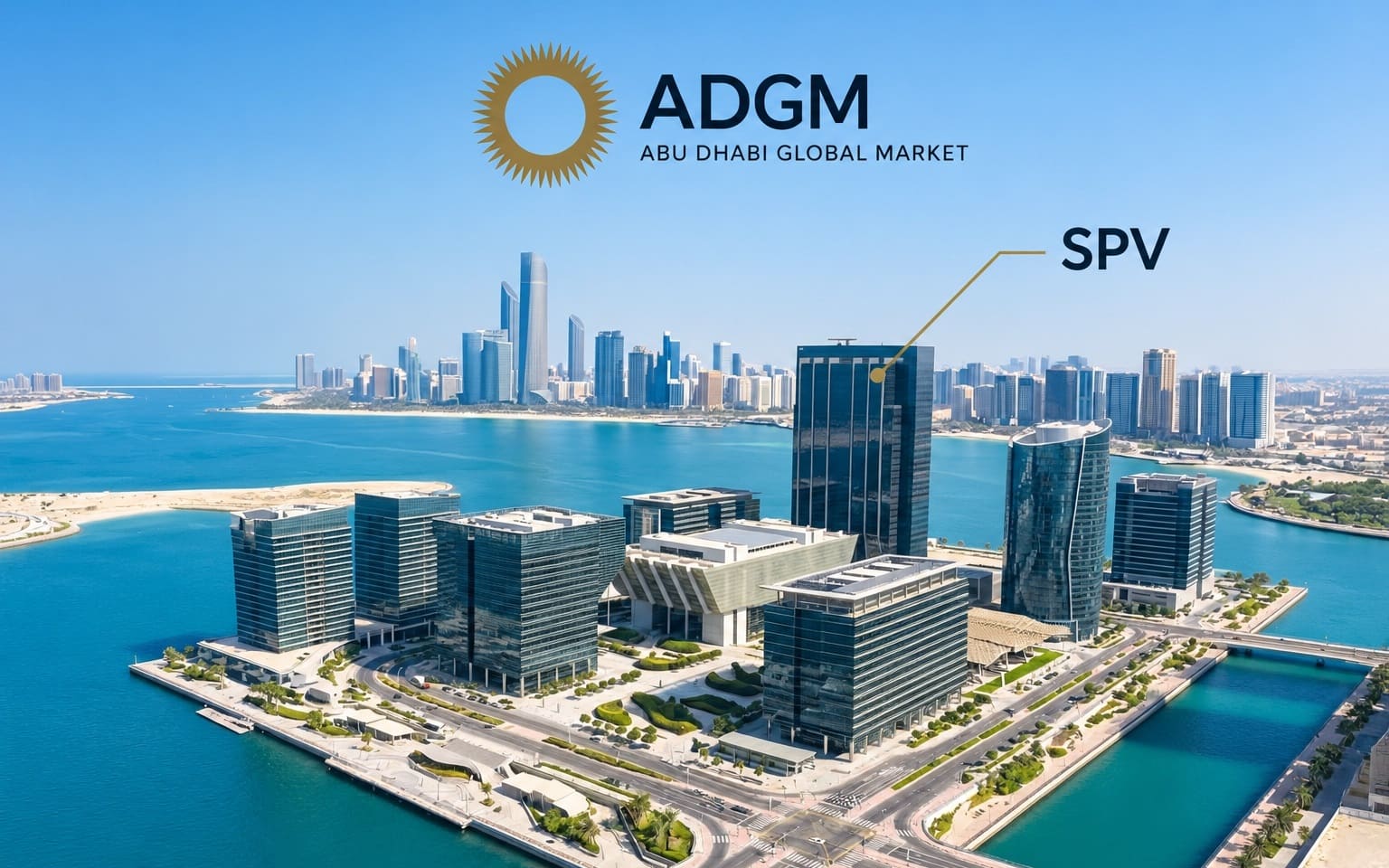
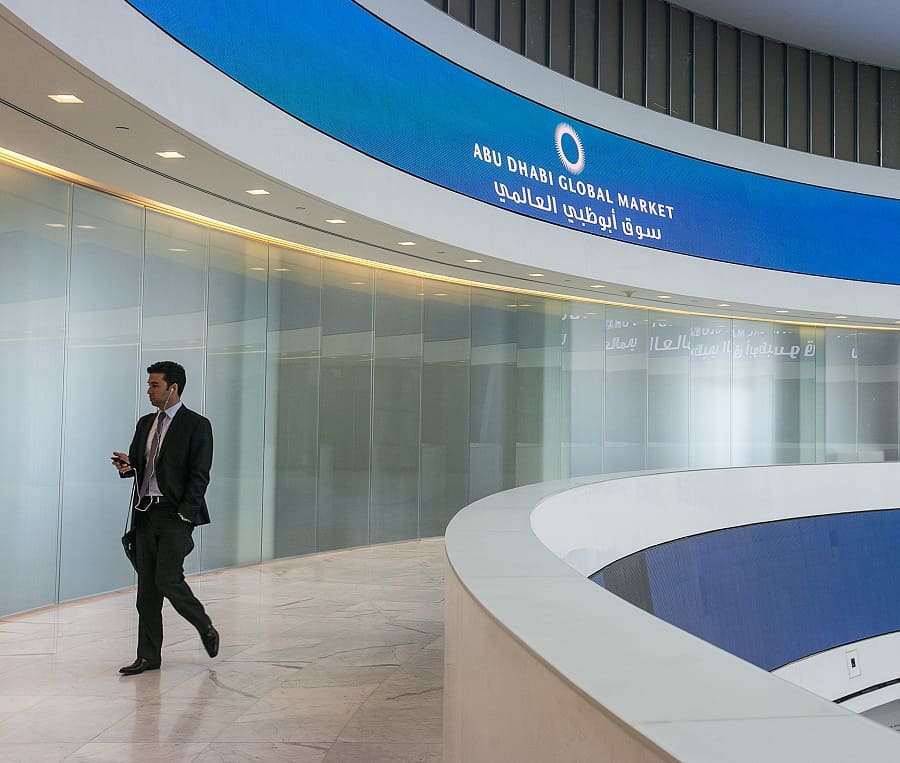
Abu Dhabi Global Market
What an SPV in ADGM actually is
In ADGM’s own definition, an SPV is a passive holding company created to ring-fence financial and legal risk: to separate specific assets and liabilities from everything else you own. It is incorporated as a private company limited by shares carrying an SPV licence, or as a Restricted Scope Company, a version of the same vehicle with reduced public disclosure.
The company runs under the ADGM Companies Regulations 2020 — a common-law framework on the English model. For an investor, counsel or credit committee in London, Zurich, Singapore or São Paulo, that makes the ADGM holding company legible on sight: familiar terminology, familiar governance logic, familiar documents.
ADGM states the central restriction plainly: an SPV cannot be used to conduct operational business or to hire staff. It is not a trading company and not a route to visas. It is a holder — of shares, buildings, rights and obligations.
Nexus: the filter nobody advertises
The requirement of a connection to the UAE or the Gulf is policy of the ADGM Registration Authority, set out in its Guidance Note on SPVs and in the filing checklists. The wording is that the applicant must demonstrate that the SPV will have an appropriate nexus with ADGM, the UAE or the wider GCC region.
ADGM recognises four forms of that connection. The SPV is owned or controlled by a company, a family, a family office or an individual based in the UAE or the GCC. The SPV holds assets located in the UAE or the region. The SPV serves transactions connected to the UAE, or delivers genuine economic benefit to the country. Or the SPV’s purpose includes issuing securities admitted to listing or trading on a venue established in ADGM.
Two points trip applicants up more than any others. The Guidance Note says directly that appointing a UAE corporate service provider does not itself create nexus — the agent is required for a different reason altogether. And an SPV wholly owned by a foreign non-resident and holding only assets outside the UAE and the GCC does not meet the requirement.
That is why we start with the connection test rather than the application form. If the ADGM nexus requirement is not already satisfied, we look at how to build it lawfully: re-registering an asset, introducing an Emirati entity into the chain, reshaping the ownership configuration. If it cannot be built, we say so on day one and propose a different jurisdiction instead of spending your money on an application with a predictable outcome.
How the registration runs
Filing is fully digital through the ADGM portal and is carried out by a licensed corporate service provider. The work runs in six steps.
- Scoping and the nexus test: which assets, where they sit, who the ultimate owner is, which connection to the UAE is being relied on and what evidences it.
- Choosing the form: a standard SPV or a Restricted Scope Company, with the consequences for disclosure and reporting spelled out.
- Building the pack: articles of association, a business plan on the ADGM template, resolutions, documents for shareholders, directors, authorised signatories and beneficial owners, and proof of the target asset — a copy of the title deed, for example.
- Reserving the name and submitting the application through the ADGM registration portal.
- Collecting the certificate of incorporation and the commercial licence stating the SPV activity.
- Putting the company into service: registered office through the provider, statutory registers, tax registration, bank account.
Timing. ADGM’s official FAQ gives a benchmark of up to ten business days where the pack is complete and the rules are followed. The “two days” that circulates in advertising is not supported by any official source. The real timeline depends on how cleanly the documents are assembled and how obvious the nexus is.
What the engagement covers
We run the project end to end rather than typing your application for you.
Structural review and the nexus test before filing. Selection of the form and the ownership configuration that fits the task. Drafting and agreeing every constitutional document. Submission and follow-through to licence. Appointment of the corporate service provider and provision of the registered office. Setting up the company’s statutory registers and its register of beneficial owners. Support on opening the bank account and on corporate tax registration.
After that comes annual maintenance: licence renewal, upkeep of the registers, preparation and filing of accounts, confirmation of registry data, and the tax return.
We do not publish prices, and that is deliberate. The figure depends on the form of company, the number of shareholders and directors, the ownership structure, translation and legalisation of documents arriving from abroad, and whether an audit will be needed. We quote per structure, after the first review.
Describe the task — we will check free of charge whether it clears the nexus test, then give you timings and a budget.
Three scenarios that drive most SPVs
Holding shares and assets. The SPV holds stakes in operating companies, separating them from the owner’s personal estate and from one another. Trouble in one company does not drag the rest down with it, and a sale is executed as a transfer of shares rather than a piecemeal disposal of assets.
Real estate. Here ADGM’s position on Abu Dhabi is strong. Under the September 2019 agreement between the ADGM Registration Authority and the Department of Urban Planning and Municipalities, qualifying ADGM structures — and SPVs are named explicitly — may register title to real estate in the Emirate of Abu Dhabi, both inside and outside the investment zones. The conditions are compliance with emirate legislation and departmental rules, while transfers of shares in such an SPV are monitored by the Registrar and require its certificates.
Family capital and succession. The SPV becomes the asset holder inside a structure topped by a foundation or a family office. Shares in the SPV pass by a single corporate action instead of a fragmented division of mismatched property, and a Restricted Scope Company keeps the ownership list off the public register.
Table 1 — What an SPV solves in each scenario
| Scenario | What it delivers | What to watch |
|---|---|---|
| Share holding | Risk isolation, clean exit | Nexus proved by asset or by owner |
| Abu Dhabi property | Title in the structure, inside and outside zones | Share transfers controlled by the Registrar |
| Dubai property | Possible, but needs verification | Status of an ADGM structure to be confirmed with the DLD |
| Family capital | Succession by shares, closed register | RSC limited to one family or a group |
Dubai deserves a separate note, because advertising here is loose with the facts. A memorandum between ADGM and the Dubai Land Department has existed since November 2018, but its official text speaks of international companies registered in ADGM, and SPVs and foundations are not named — unlike the comparable agreements covering Abu Dhabi and Ajman. There is at present no confirmation from the Land Department’s own side in open sources. We do handle these transactions, but we confirm the status of the specific structure with the department before the purchase, not after it.
SPV or Restricted Scope Company
A Restricted Scope Company is the same type of company with a markedly smaller public footprint. It is not open to everyone: under the ADGM regulations it may be formed by a subsidiary of a group that publishes consolidated accounts, a subsidiary of a body created by federal or emirate law, or a company wholly owned by a single natural person or by a group of members of the same family.
The family route suits succession planning, but carries a hard caveat: a transfer of the company to someone outside the definition of family is void. That safety catch is built in, and the structure has to be designed around it.
Table 2 — Standard SPV and Restricted Scope Company
| Parameter | SPV (LTD) | Restricted Scope Company |
|---|---|---|
| Directors on the public register | Yes | No |
| Shareholders on the public register | Yes | No |
| Accounts filed with the registrar | Yes, but not published | Not filed |
| Audit | Yes, unless small companies regime | Not required |
| Who may form it | Anyone with nexus | A group or a single family |
Full disclosure to the registrar remains in both cases: a non-public register means closed to outsiders, not closed to ADGM. The ADGM register of beneficial owners is likewise not public — the registrar is obliged to keep it confidential and discloses to an individual only the information concerning that person.
Requirements, reporting and tax
The composition rules are straightforward. At least one director, and at least one of the directors must be a natural person; corporate directors are permitted. No company secretary is required for a private company under the ADGM regulations. The regulations set no minimum share capital for private companies — the USD 50,000 authorised minimum applies to public companies only, and issuing at least one share on incorporation is enough. At least one authorised signatory must be a UAE or GCC national, or hold a valid UAE residence visa.
A registered office in ADGM is mandatory under the regulations, but the SPV needs no premises of its own: the address is supplied by the corporate service provider, whose appointment has been mandatory for non-exempt SPVs since July 2021.
Accounts are prepared by everyone. A standard SPV files them with the registrar within nine months of the end of the reporting period, and the filed accounts are not publicly disclosed. An audit is required unless the company qualifies under the small companies regime: turnover of not more than USD 13.5 million and not more than 35 employees. A Restricted Scope Company is exempt from audit and does not file accounts with the registrar.
Table 3 — The tax perimeter of an SPV
| Question | How it actually works |
|---|---|
| Corporate tax registration | Mandatory; the SPV is a UAE tax resident |
| Return | Within nine months after the tax period |
| Holding shares | Falls within the list of Qualifying Activities |
| Dividends from UAE companies | Exempt with no additional tests |
| Property outside a free zone | Excluded Activity, affects the 0% status |
On the zero rate it is worth being blunt, because this is where the misleading claims cluster. Qualifying Free Zone Person status gives 0% on qualifying income, and holding shares and securities for investment purposes is on the list — subject to a twelve-month holding test. But owning and exploiting immovable property outside a free zone is an Excluded Activity. Income from such an asset is non-qualifying, counts toward the de minimis limit, and once that limit is exceeded it strips the company of the zero rate from the start of the tax period. The line that “an SPV with UAE property pays nothing” is wrong, and no structure should be designed around it. Corporate tax for an SPV in the UAE has to be modelled asset by asset.
The participation exemption works separately: with an interest of 5% or an acquisition cost of AED 4 million, a holding period of at least twelve months, and the participation taxed at not less than 9%, foreign dividends and capital gains stay out of the taxable base. Dividends from UAE resident companies are exempt without any of those tests.
A tax residency certificate for treaty purposes is issued by the tax authority, and registration in the UAE alone is not enough: you must meet the residence test of the specific treaty and show that management sits in the UAE. For an SPV with no office of its own that is a separate piece of work, and we raise it before a client builds numbers on the certificate.
Where to start
ADGM SPV registration pays for itself when the structure is designed around specific assets rather than copied from a template. Nexus, the choice between an SPV and a Restricted Scope Company, the tax perimeter and the bank’s requirements are interlocked: move one element and the others shift with it, and rebuilding after incorporation costs more than thinking it through beforehand.
Tell us what needs to be held and why. We will test the connection to the UAE, propose a configuration, give you timings and a quote, and carry the project through to licence, bank account and tax registration.
Get a consultation
Disclaimer. This material is informational and does not replace legal and tax advice. References to the ADGM regulations and UAE legislation follow the official versions current at the date of publication; rules and subordinate legislation are updated regularly. Verify the ownership structure and the tax consequences against your own circumstances before taking decisions.
Information current as of September 2026.