
Deciding which accounting software to choose in the UAE is no longer a box-ticking exercise. With VAT and Corporate Tax now in force, businesses need a tool that calculates 5% VAT, prepares returns, supports Corporate Tax at 9%, and issues FTA-compliant tax invoices. Three cloud platforms dominate almost every shortlist — Xero, QuickBooks and Zoho Books. All three keep the books competently, yet each fits the realities of the Emirates in a different way.
The Xero vs QuickBooks vs Zoho Books UAE debate isn’t settled by star ratings in generic reviews. It’s settled by local requirements: FTA accreditation and compliance, Arabic support in your documents, how smoothly you can file through EmaraTax, and how ready the platform is for national e-invoicing, which is arriving in phases. Below we compare the three against those criteria, weigh the strengths and trade-offs of each, and suggest which one suits your type of business.
What matters for accounting in the UAE
Before comparing products, it helps to pin down the criteria that genuinely move the needle in the Emirates:
- FTA compliance. The Federal Tax Authority keeps a register of accredited tax accounting software. Accreditation simplifies reporting and reassures auditors; verify the current status on the FTA site.
- VAT 5% and VAT Form 201. The software should calculate VAT correctly, validate TRNs, and assemble the data for the return (Form 201) filed through the EmaraTax portal.
- Corporate Tax 9%. You’ll want expense tagging, multi-currency ledgers, and profit and loss reports to work out the taxable base and support an audit.
- Arabic language. Many official documents in the UAE benefit from bilingual (Arabic and English) invoices, and in some cases this is a requirement.
- E-invoicing (Peppol / PINT AE). The UAE is rolling out national electronic invoicing in phases across 2026–2027 through Accredited Service Providers (ASPs), so it matters that your platform is preparing for it.
- Price and integrations. Subscription cost, bank feeds, the app ecosystem, and how comfortable your team feels day to day.
It’s on exactly these points that the three programs diverge most.
Comparison: Xero, QuickBooks and Zoho Books
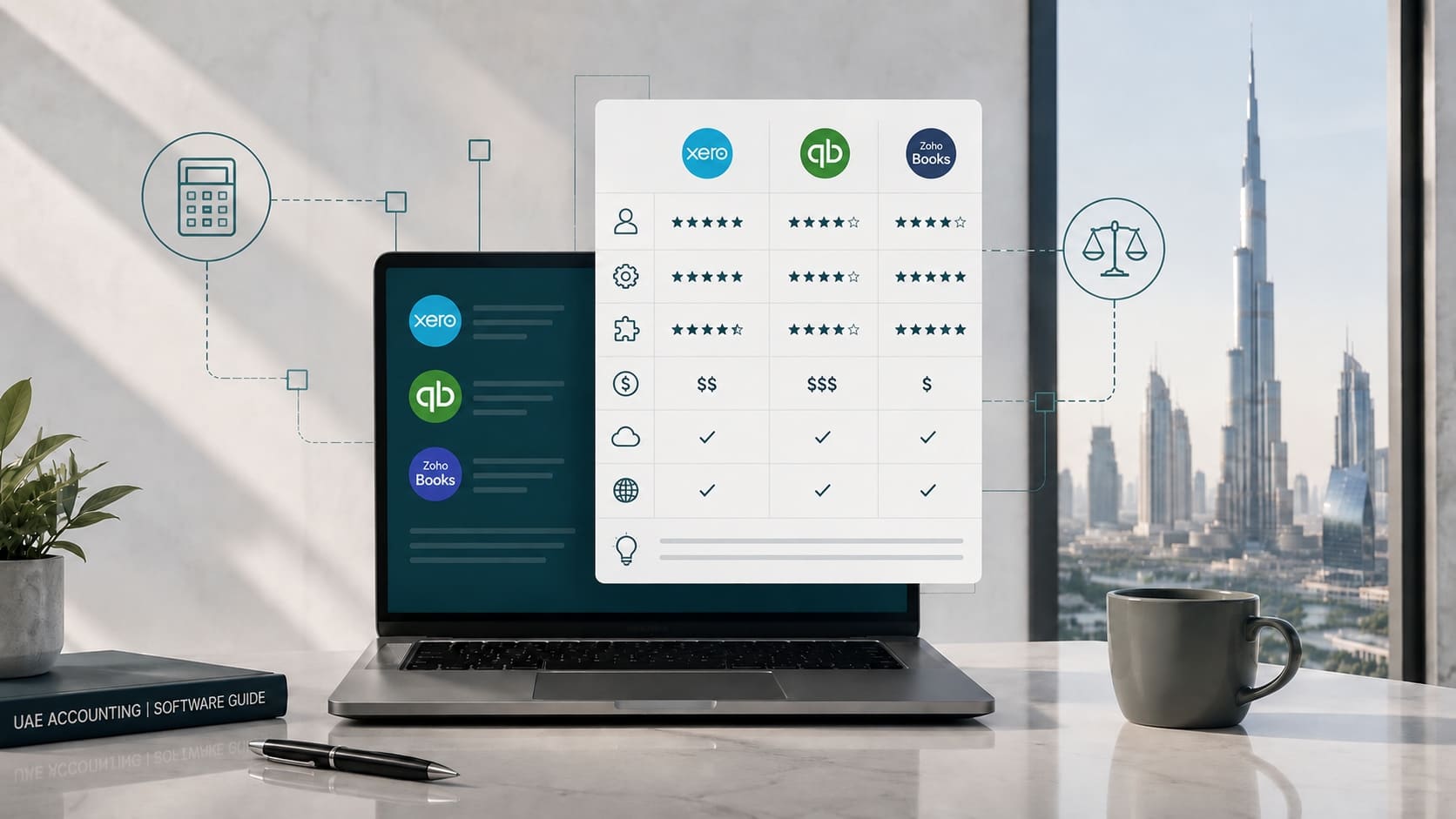
Table 1 — Head-to-head on the criteria that matter in the UAE
| Criterion | Zoho Books | QuickBooks Online | Xero |
|---|---|---|---|
| UAE localisation | Deepest; FTA-accredited | Solid; VAT and TRN tracking | On the FTA software register |
| Arabic on invoices | Native (Arabic + English) | Limited | Via custom templates |
| VAT 5% and Form 201 | Built-in; maps to Form 201 | Calculates; manual EmaraTax export | Reports; manual export |
| Corporate Tax 9% | Yes (tagging, reports) | Yes | Yes |
| Bank feeds and integrations | Zoho ecosystem | Broad | Best-in-class (1000+) |
| Price | Affordable; free plan available | Mid-range | Mid-range and up |
| Best for | UAE SMEs, Arabic, budget | Existing QuickBooks users | Services, multi-currency, integrations |
As the table shows, all three generate FTA-compliant tax invoices, but they differ noticeably in depth of localisation and filing convenience. Let’s look at each in turn.
Zoho Books — best localised for the UAE

Zoho Books is the most “Emirati” of the three. It’s FTA-accredited, produces native bilingual invoices in Arabic and English, calculates 5% VAT out of the box, validates TRNs, and maps the data to VAT Form 201 — which streamlines return preparation for EmaraTax. Corporate Tax is covered too, with expense tagging and the reports you need, and small businesses can start on an affordable plan, with a free tier to get going.
Its strengths are deep localisation, Arabic as standard, keen pricing, and the wider Zoho ecosystem (CRM, inventory, invoicing). The limitations: bank feeds and third-party integrations are weaker than Xero’s, and companies with very complex international processes may eventually bump against a functionality ceiling. On balance, Zoho Books is the best fit for most UAE SMEs.
QuickBooks Online — the familiar global tool
QuickBooks Online is a powerful, widely familiar platform with strong bookkeeping, dependable VAT tracking, and TRN support. It calculates tax reliably and handles full-scale accounting, backed by a vast ecosystem and plenty of learning resources. The UAE caveat: native Arabic is limited, and VAT figures for the return are often exported to EmaraTax manually.
QuickBooks shines when you or your team already know it — when the accountant is fluent in its logic and switching would cost more than it saves. For Corporate Tax it delivers the reports and multi-currency ledgers you need. If Arabic invoices and a direct mapping to Form 201 aren’t critical for you, QuickBooks is a sturdy choice.
Xero — strong in integrations and bank feeds
Xero is prized for effortless reconciliation, best-in-class bank feeds, and an ecosystem of more than a thousand integrations, plus multi-currency on its higher plans. It sits on the FTA software register and produces VAT reporting, though moving data into EmaraTax is usually manual and detailed Arabic work calls for custom templates.
Xero is especially good for service and project-based companies, and for businesses with international operations that value automated reconciliation and rich integrations. If your priority is a deep app ecosystem and tidy bank feeds rather than native Arabic, Xero earns its place on the shortlist.
How to choose for your business
There’s no one-size-fits-all answer — it comes down to your company profile:
- A UAE SME where Arabic and budget matter — Zoho Books: deep localisation, FTA accreditation, and bilingual invoices.
- A team already working in QuickBooks, or one that values its ecosystem — QuickBooks Online: familiar interface and dependable VAT tracking.
- A service or project business with multi-currency and many integrations — Xero: the best bank feeds and apps.
In practice, the details decide it: whether you need inventory, how many currencies you handle, whether you deal with local government bodies (where Arabic counts), and how important direct return preparation is. We help match those requirements to what each program can do — so you don’t overpay for features you’ll never use.
E-invoicing 2026: what to check
One factor to plan for over the next couple of years is national e-invoicing. The UAE is rolling out electronic invoicing based on Peppol / PINT AE in phases, with exchange running through Accredited Service Providers (ASPs). All three platforms say they’re preparing for the new standard, but actual readiness varies and keeps changing. So build e-invoicing into your requirements from the start, and check the current connection status against the FTA register — you don’t want to be swapping systems mid-transition.
How we help
Dynasty Business Adviser sets up accounting in the UAE end to end: we select and implement the right program (Zoho Books, QuickBooks or Xero) for your model, configure VAT and Corporate Tax, prepare and file returns through EmaraTax, keep the books, and support you during audits. You get not just software but a working process that meets FTA requirements — and your time back for the business itself.
Need help choosing and implementing?
The right accounting software saves time and cuts the risk of reporting errors; the wrong one adds manual work and penalties. To pick a system that fits both FTA requirements and your business — and roll it out without hiccups — talk to specialists. Contact Dynasty Business Adviser: we’ll select and configure Zoho Books, QuickBooks or Xero and take the bookkeeping off your plate.
Get a consultation: ☎️ +971 52 634 1022 · info@dynasty-uae.com
Get a consultation
Disclaimer: this material is for information only and is not tax advice. Software functionality, FTA accreditation status, and e-invoicing rules can change. Verify current details with the vendors and official sources (FTA).