

You can get a power of attorney notarized over a 10-minute video call from home, or the classic way: an appointment, a queue, and a wet stamp in an office. An online notary in the UAE and a traditional notary solve the same task — giving a document legal force — but they do it differently, and not every document travels equally well down both routes.
The difference isn’t about which one is “more real”: electronic documents and signatures carry the same legal weight as paper ones in the UAE under Federal Decree-Law No. 46 of 2021. The real difference is how identity gets verified, how long it takes, and which documents each format can actually handle. Here’s how both work, how they compare, and when to pick which.
What an Online Notary Is and How It Differs from a Traditional One

A traditional notary in the UAE means an in-person visit to a notary office at Dubai Courts or a Ministry of Justice branch: face-to-face document checks, a signature given in front of an officer, and a physical stamp and seal on paper.
An online notary runs through the same government system, just without the visit: the applicant joins a video call, the officer checks the original document on camera, and the finished certificate arrives electronically with a QR code for verification. Both carry identical legal force — only the process of getting there differs.
How a Traditional Notary Visit Works
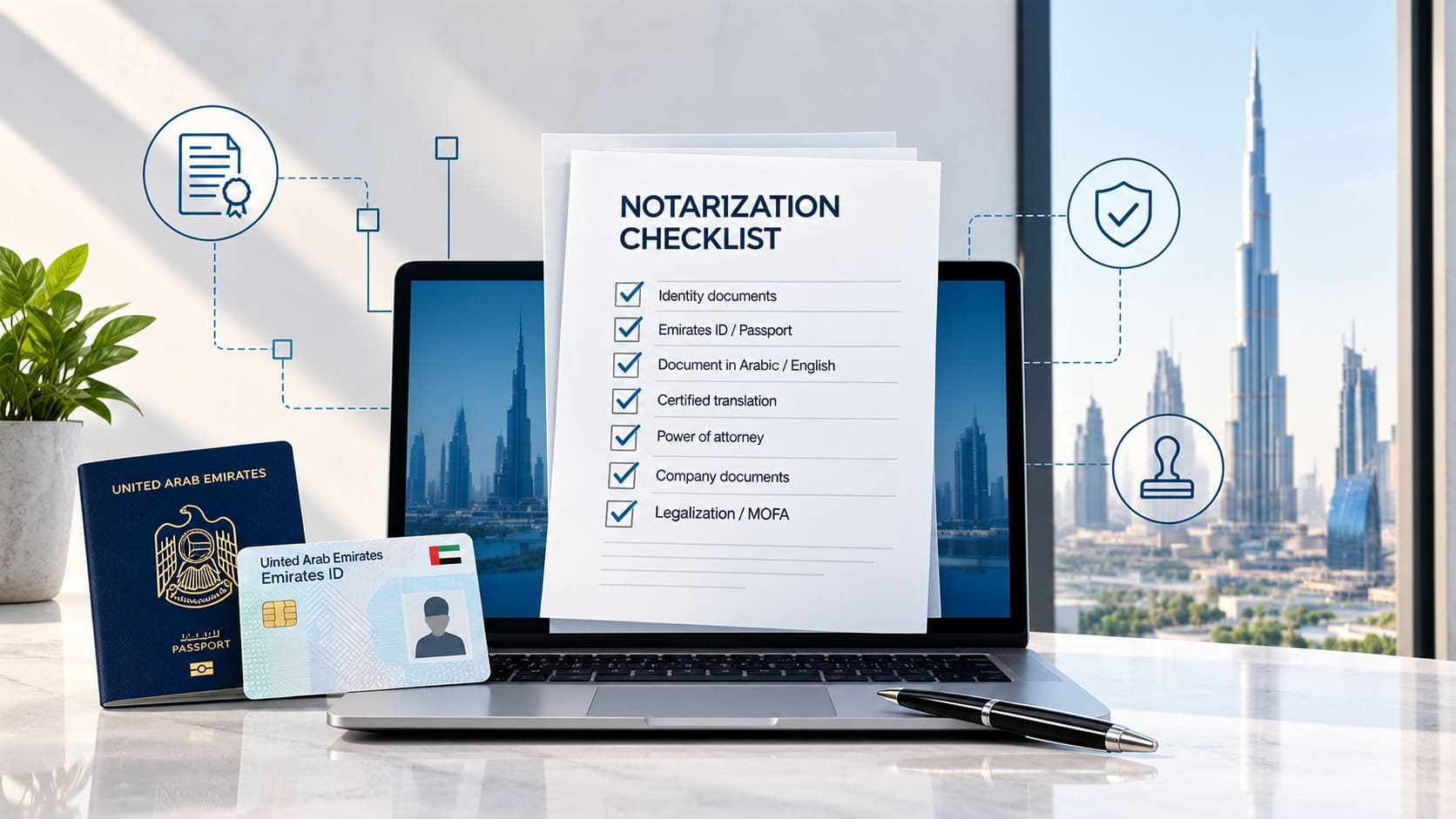
First you book an appointment — through the Dubai Courts portal or in person. Then comes a queue or a wait for your slot, showing up with the original Emirates ID or passport, signing the document in front of the notary, and walking out with a stamped paper.
The format is tied to office hours and requires every signatory to be physically present at once if there’s more than one. By Dubai Courts’ own definition, notarization means certifying a signature “in the presence of the party or their representative” — and even with a busy online service running, the authority still keeps a separate physical channel: licensed Private Notary Offices with more flexible hours and locations.
How Online Notarization Works in the UAE
The process centers on a single video call. A draft gets prepared for the specific task, the wording is agreed with the applicant, and then a call is booked over Zoom — usually 5–10 minutes, during which the officer checks the original Emirates ID or passport and confirms identity.
Which authority handles it depends on residency status: a resident with an Emirates ID goes through Dubai Courts, a non-resident goes through the Ministry of Justice using a passport, and only for a power of attorney. The finished document lands by email — up to 48 hours via Dubai Courts, or about 30 minutes via the Ministry of Justice. Pre-recorded video isn’t accepted instead of the call — only real time.
Table 1 — Online Notary vs Traditional Notary in the UAE
| Aspect | Online Notary | Traditional Notary |
|---|---|---|
| Presence | Video call from anywhere | In-person office visit |
| Verification | Document and identity checked on camera | Face-to-face check |
| Timing | 30 minutes to 48 hours | Depends on the booking and queue |
| Availability | Book a convenient time | Office hours only |
Both routes run on the same government fee and the same legal basis — the difference is how you submit, not the document’s legal status.
Which Documents Still Require an In-Person Visit
A video call can’t close every case. Real estate is the clearest example: the final signing and cheque exchange still happen physically, at the Trustee Office under the Dubai Land Department, where the parties or their POA-appointed representatives sign in person. A power of attorney removes the need for the owner to show up — but someone still has to be there physically, and it isn’t the only such case: the same logic applies to a number of court filings and situations that require several parties present at once with originals checked on the spot.
A separate category: documents headed for countries that don’t recognize UAE e-notarization, or that require a wet-ink signature and full consular legalization through an embassy. The traditional route is the safer bet there — worth confirming the receiving side’s requirements before you pick a format, so you don’t have to redo the document.

Which Documents Suit an Online Notary
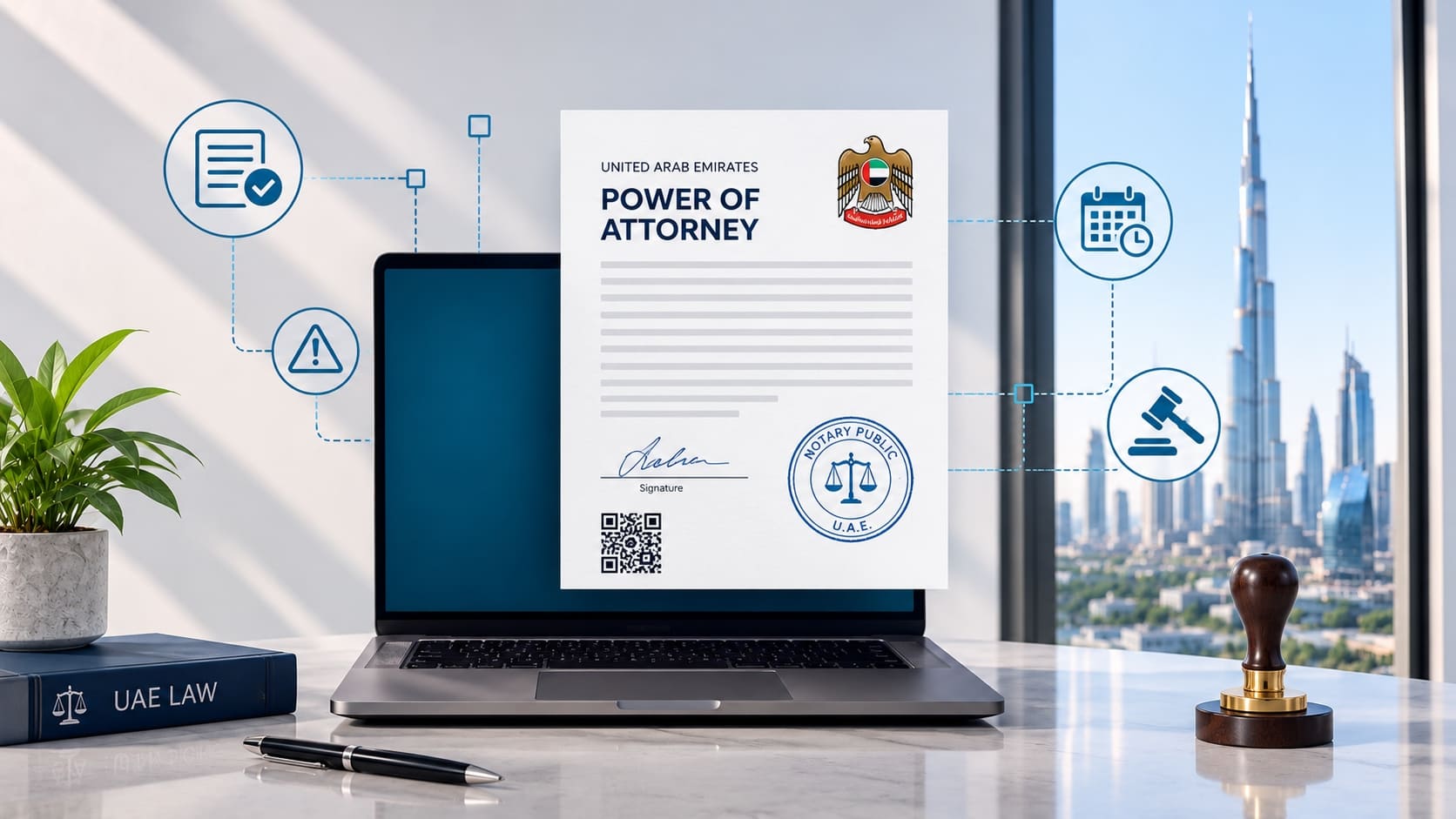
Most routine paperwork goes through online without issues: every type of power of attorney — general, real estate, a custom-worded special POA, corporate management POA — plus declarations, affidavits, and urgent business contracts that don’t require several parties in the same room at once.
That’s exactly why most personal and business needs now go the online route: it’s faster, isn’t tied to office hours, and doesn’t require a trip to the UAE if the applicant is abroad.
What’s Faster and Cheaper
The government fee is the same either way — it’s tied to the document type, not the submission method. The real difference is time: an in-person visit means booking, travel, and waiting in a queue, while a video call takes 5–10 minutes at a slot you pick.
An interpreter for the call — needed only if the language isn’t Arabic or English — costs extra either way. The traditional route has the same need; only the logistics of arranging it differ.
The Bottom Line
An online notary in the UAE clears most routine tasks faster and without an office visit, but it doesn’t replace the traditional format wherever several parties need to be physically present or the receiving country’s rules specifically call for in-person notarization. Before picking a format, it’s worth confirming which one will actually be accepted where the document is going.
Dynasty Business Adviser can help match the notarization format to your specific document, wherever you are.
Get a consultation
Procedures reflect September 2026 and may change — confirm current terms with a specialist before proceeding. This article is for information only and isn’t legal advice.